Original article: Marcel le da cátedra a Kast: “La estabilidad en democracia exige acuerdos amplios en materia tributaria”
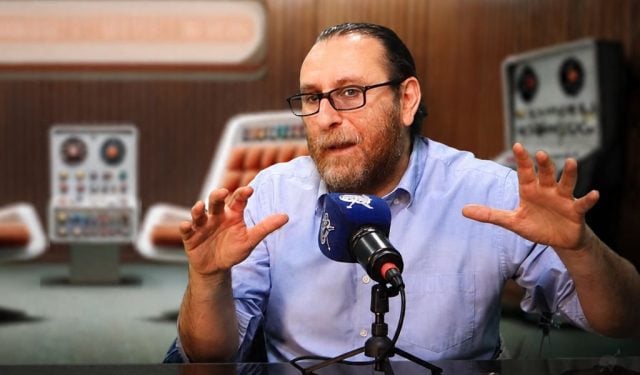
Former Finance Minister Mario Marcel has voiced strong criticisms of the proposals included in José Kast‘s mega tax reform, highlighting issues like the guarantee of tax invariability, which he warns «undermines basic democratic principles«.
During his presentation to the Finance Committee of the Chamber of Deputies, the economist and academic criticized the extreme right-wing leader’s approach, emphasizing that merely protecting tax rules is insufficient to ensure increased investments; instead, he asserted that «democratic stability is built through broad agreements» rather than through commitments that disproportionately benefit certain sectors.
Marcel emphasized, «The only way to achieve tax stability in democracy is through wide-ranging political agreements on tax matters. It’s not about a project that wins by one, two, three, or four or five votes,» he stated.
In front of the parliamentary committee, the former secretary of state raised both technical and political concerns regarding Kast’s mega reform, pointing out controversial measures such as reducing the first-category tax from 27% to 23%, eliminating the tax on capital gains from securities, implementing a tax credit for formal employment, and establishing tax invariability for 25 years for investments exceeding $50 million—a proposal criticized as a «commitment» for future governments.
The prospect of companies accessing an alternative tax regime for over two decades raises significant concerns about its impact on Chile’s tax system.
Kast’s administration claims this mechanism serves as a «signal of certainty to attract capital, both foreign and domestic.» However, the extended time frame and the relatively low investment threshold (US$50 million) raise questions about potential rigidities in fiscal policy that could favor a specific economic sector, especially as democracy offers greater predictability and Chile enjoys a low country risk.
«In 2025, investment in Chile increased by 7% without invariability»
In response to a question from Deputy Flor Weisse (UDI) regarding the application of invariability and its relationship with investors, the former finance minister noted that during the administration of former President Gabriel, specifically in 2025, investment in Chile rose by 7% and «there was no invariability.»
Marcel added, «In those years that we often cite as periods of high growth in Chile, it’s true that DL600 was in place, but it applied to foreign investments, and during those years there was also significant national investment that wasn’t waiting for or demanding invariability.»
Marcel: «How many countries with significant investment have invariability?»
Marcel challenged the idea coming from La Moneda that increased investment hinges on invariability, calling for a reflection on how many countries accommodate a level of tax invariability similar to that proposed in the mega reform.
«How many countries with significant investment have invariability? Not just for foreign investors but for domestic ones, not just as a paid feature but for free; not merely applicable to the income withdrawn by investors but also to the first-category tax, VAT, and the tax administration circulars? I am certain there are none,» he argued.
«Thus, believing that in Chile we will elevate investment by creating invariability under these characteristics is not comparable either to our past or to other countries today,» he emphasized.
In his address to the Finance Committee, he argued for strengthening the stability of democracy and reminded that the Constitution stipulates that tax matters are exclusively the initiative of the President of the Republic.
«So, are we going to limit that power?» he questioned.
In Marcel’s view, if broad consensus on tax issues is achieved, there is no need for invariability to be enshrined in law or the Constitution.
«This is how to do this in a democracy. Economists have written extensive literature on these topics, regarding how to reduce uncertainty, but not all are compatible with a functioning democratic regime. We economists must exercise some discretion when addressing these matters because, while invariability is demanded for tax matters, many Chileans also need invariability in their salaries or job security,» he maintained.
Obtén tu Pasaporte y apoya a El Ciudadano
Elimina la publicidad, accede a contenido exclusivo y sé parte de la comunidad.
Cancela en cualquier momento · Sin permanencia