«My Father Was a Hero»: Son of Army Non-Commissioned Officer Breaks a Half-Century Silence, Revealing His Father’s Choice to Die Rather Than Kill Fellow Citizens
«My father was a hero», asserted Isaac Cisterna Castillo while remembering his father, Non-Commissioned Officer Manuel Enrique Cisterna Badilla, who «preferred to give his life» rather than follow orders from the dictatorship and kill fellow citizens.
On this Saturday, September 19, as the Army honors its Glories, Isaac Cisterna breaks decades of silence to reconstruct his father’s story, Manuel Enrique Cisterna Badilla, a non-commissioned officer who, according to family accounts, opposed the dictatorship and refused to kill civilians.
Isaac reached out to the team at El Ciudadano after reading the article about the police officer Guillermo Schmidt, who was executed without a court-martial for refusing to shoot at workers during the 1973 coup in Antofagasta. With the 50th anniversary of his father’s death approaching, he aims to honor his memory, ensure that the country recognizes his legacy, and challenge the official narrative of suicide.
“My father was from the Army’s non-commissioned officer school, he was not a private, he was a non-commissioned officer, and they declared him missing in 1975. They said he was sent on a mission to Guayacán, near Cajón de San José de Maipo, and neither my family nor my mother knew anything, as it was a secret operation. Then in February 1976, they declared him dead, stating that he had committed suicide,” he recounted.
In an interview with our outlet, Isaac indicated that the official version was never believed by the family, as the Army informed them that the non-commissioned officer was found dead under a bed, wrapped in a blanket, with a gunshot wound to the left side of his body, even though he was right-handed.
“Someone who has committed suicide, I don’t know if they take the time to position themselves under a bed,” he questioned ironically.
He recounted the scene at the funeral and noted that the family was never allowed to see the body of Manuel Enrique Cisterna Badilla, as they were given a sealed coffin, with his mother repeatedly insisting, «that’s not Enrique, that’s not Enrique.»
The soldier, originally from southern Chile —from Cañete, Arauco Province, Biobío Region— was an only child. His parents lived on San Pablo Street in Pudahuel, Metropolitan Region, and when persecution fell upon the family, they also had to flee, returning to the south and disappearing from the family map for decades.
“They were also pursued by the military, because my father was opposed to killing civilians, killing Chileans. He had refused,” he explained, piecing together information he only learned in 2003 when his maternal grandmother passed away and the family traveled to Temuco.
«Traitor» for Defending the People and the Severed Ear That Sealed His Fate
Cisterna Badilla’s refusal to participate in extrajudicial executions was not an isolated or symbolic gesture, and according to his son, it was a death sentence signed by his own Army comrades. «To them, my father was a traitor, to the Army, he was a traitor for opposing the regime,» Isaac Cisterna stated, who now understands that this word —»traitor»— sealed the fate of an entire family.
The non-commissioned officer did not just refuse to kill, as his paternal grandfather told Isaac; he was also involved in an incident that ultimately condemned him.
“They were cleaning the rifles, marking how many kills they had, and my father’s had no marks because he hadn’t killed, and one of the soldiers said, ‘Come on, you, bitch Cisterna, hold on and kill one,’ ‘You don’t have a single mark, communist dog,’ he said. And my father was a commando, and he was one of the good ones; he grabbed a knife, a corvo, and threw it, cutting off the ear and left the knife stuck in the wall,” he recounted his grandfather telling him.
This act of rebellion —cutting off the ear of an officer who humiliated him for not killing— marked the beginning of the end. “My father told them they would kill him after that incident due to his reaction of throwing a knife at another soldier,” Isaac narrated, who still vividly remembers the diplomas he saw as a child in his family home: his father was a paratrooper, commando instructor, helicopter pilot.
“The guy was super trained, but this incident pushed him into oblivion”, he concluded.
No Pension, No Justice, and Pursued by the Dictatorship
The Cisterna family did not just lose a father; they lost the ability to know who he was. “My grandmother took us in, provided us education, taught us principles and values, but there was never any talk about my father. Neither my uncles spoke of my father. It was as if it was unsafe to talk,” Isaac recounted.
The persecution did not end with the death of Manuel Enrique Cisterna Badilla; it continued for years, with periodic visits from military personnel to his grandmother’s house, even after the family moved from the military facility they had been living in.
“They pursued us under the pretense of bringing Christmas gifts,” he explained.
The fear ran so deep that the family almost sought exile in Belgium. “We were going to leave as exiles to Belgium. We didn’t go because my grandmother didn’t want us to leave. And also out of fear that, I don’t know, something might happen to us,” Isaac commented.
Isaac’s maternal grandmother became the pillar of the family but also the guardian of a silence that would protect the children from a dangerously concealed truth. “I didn’t have the information, we had no information,” he stated.
He mentioned that his mother, who became a widow with three children, one of whom was born on December 3, 1975, never knew her father, fell into a state of depression that she still suffers from today.
“My mother fell into a terrible depression with two kids, one was 5 years old, the other was 4 years old, which was me, and the youngest was a baby,” he said.
Although she was the widow of an Army official, she never received the pension or the benefits that were due to her.
“My mother never received the pension for being the widow of a soldier,” Isaac protested, mentioning that the only support she received was a small amount which she used to buy beds, bedding, and a wardrobe to settle into her mother’s house.
“There was no economic repair, emotional compensation, or reparation. That was all they gave her—something to buy furniture, and she spent it on that,” he clarified.
Meanwhile, the children of a non-commissioned officer —who were entitled to free education and benefits by regulation— were left completely helpless.
“We received nothing, absolutely nothing. I am now 55 years old, I no longer have the strength to say, I want this, I want that. But yes, the recognition that my father was someone who defended the values of the people,” he emphasized.
The silence was partially broken in 2003 when his maternal grandmother died, and the family traveled to Temuco. There, his paternal grandparents —who had fled to the south— revealed for the first time the truth: Manuel Enrique was an opponent of the dictatorship, had refused to kill, was persecuted, and had warned his parents to hide because he knew he was going to be killed.
“He told them: ‘Return to the south, hide, because they are following me, and something will happen to me at any moment.’,” Isaac stated.
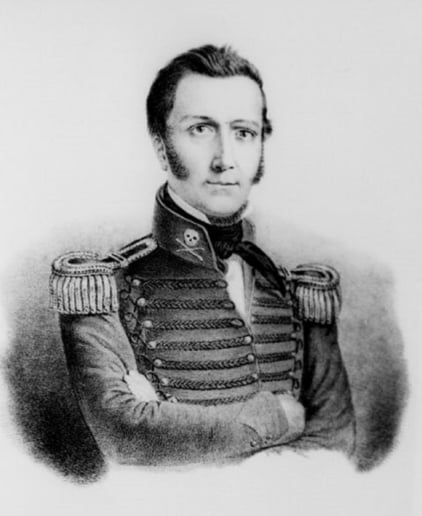
The Book of Manuel Rodríguez Erdoíza
Isaac recalls his paternal grandfather passing away years later —in 2012—and much of the material memory was lost: books, writings, photographs, and personal items of Manuel Enrique Cisterna.
One of those lost items was a book by Manuel Rodríguez Erdoíza, the iconic guerrilla fighter of Chile’s Independence, containing handwritten notes from his father.
“It was a book that had my father’s notes on some pages, a book by Manuel Rodríguez. This is utterly atypical: a soldier of rank, a non-commissioned officer in the Army, wouldn’t own a book by Manuel Rodríguez,” Isaac reflected. For him, this detail reveals his father’s true political identity: a military man who read about the popular hero, the guerrilla, the symbol of the Chilean left.
“The right is marked by O’Higgins, and the left is marked by Manuel Rodríguez. And my father had those books, my father wrote, wrote his thoughts, and unfortunately, I have none of that,” he pointed out.
The persecution also reached the children of military service age. “My older brother tried, he wanted to join the military academy. He didn’t qualify, even though he had excellent grades. None of us could fulfill military service. They exempted us from it,” Isaac recounted.
The most dramatic case was that of his younger brother, Patricio, born in December 1975, who wanted to enter military service and was notified at the airport that he could not do so by order of the Ministry of Defense.
“When they were boarding the plane, one of the soldiers there told me: ‘No, you cannot serve in the military by order of the Ministry of Defense,’ as a letter from the Ministry of Defense said that Patricio Cisterna could not serve in the military. And he didn’t do it,” Isaac recounted.
The older brother, who died in 2014 in an accident, attempted in the 90s to contact a friend of his father’s who worked at the Ministry of Defense. “He went to talk, and this person did not receive him, did not let him in. And he worked at the Ministry of Defense and he was alive,” Isaac recalled, noting that years later, in 2003, while traveling to Temuco, they learned why: that man was one who had survived because he had killed people and knew that Manuel Enrique Cisterna had not.
In the 1990s, Isaac’s mother was contacted by the Socialist Party and the PPD to offer her testimony when the Rettig report came out, but she chose not to do so.
“My mother was called to give her testimony, but she didn’t have the strength to face that, to live through that; she didn’t have it,” he told El Ciudadano.
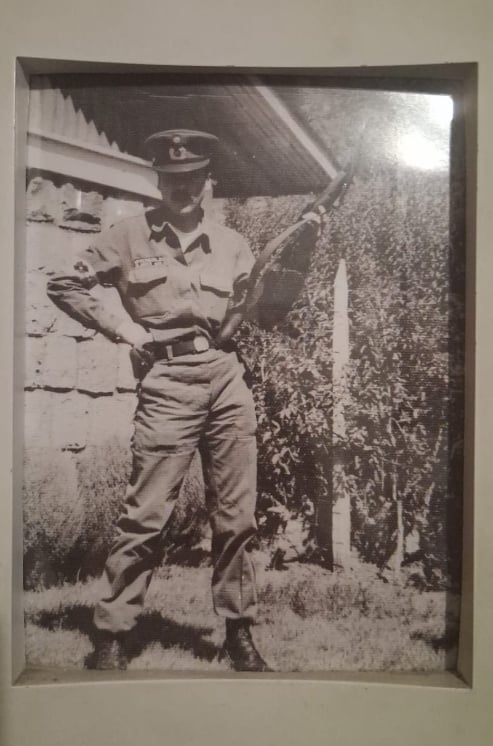
«My Father Was a Hero»: The Personal Liberation of Isaac Cisterna
As half a century has passed since the disappearance and death of his father, Isaac Cisterna, now 55, with three daughters —the eldest being 29 years old— decided to raise his voice and tell the story of a brave soldier who opposed the Pinochet dictatorship.
“I think more than anything, it is a personal liberation to say: my father was a hero, he was a hero because he gave his life for others, he did not want to kill the innocent, he did not want to kill compatriots,” he declared.
The decision to break the silence does not stem from economic interest —»I never cared about the economic aspect», he clarified — but from the need to restore the memory of a man who was erased by the Army and the State, and whose family suffered persecution.
“I believe my father deserves that respect, and he merits my respect above all. And today, he has that respect,» he affirmed.
To Isaac, the story of Manuel Enrique Cisterna Badilla is not an isolated case within the Army that celebrates its glories this Saturday.
“I know there were many more, and I also know that there were comrades of my father who also died; I don’t have the names because I was a child and in my family, the topic was not discussed,” he pointed out, noting that his account is intertwined with that of Guillermo Schmidt, the police officer killed for refusing to shoot civilians, and with hundreds of soldiers who, like his father, were labeled as traitors for opposing the dictatorship.
“My father must have suffered at the hands of his own colleagues for defending the people,” he lamented.
Denial and Forgetting: The Outstanding Debt with Sergeant Cisterna
In a political context where denialism is advancing and a far-right president like José Kast governs Chile, Isaac felt that it was the right time to tell the story of his father and his family.
“That’s why it hurts even more now that we have a far-right president and that denialism is promoted regarding everything that happened during the dictatorship, how they killed, how they tortured,” he expressed.
The four-year-old child who saw his mother hesitate before a closed coffin has grown into a man with three daughters who wants to ensure that his father is remembered, as he himself defines it, as “a hero.”
“My eldest daughter turned 29 on Saturday. So, my father deserves this, he deserves to be remembered, to be known that there was a man who stood with the people during the dictatorship, and that man was my father,” he asserted.
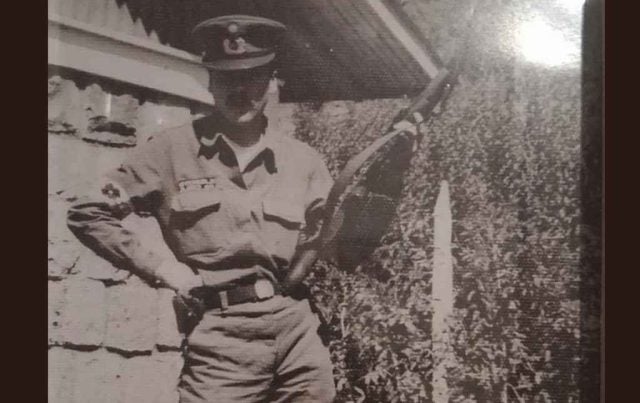
*Featured photo: Manuel Enrique Cisterna Badilla, Non-Commissioned Officer in the Army. Family archive photo provided by his son, Isaac Cisterna Castillo.
Obtén tu Pasaporte y apoya a El Ciudadano
Elimina la publicidad, accede a contenido exclusivo y sé parte de la comunidad.
Cancela en cualquier momento · Sin permanencia
Artículos Relacionados
Joaquín Lavín León Case: 'Ghost' Employee Paid by Congress Allegedly Worked on Father's Campaign
Hace 3 meses