Original article: Nuevo golpe al bolsillo: bencinas volverían a subir tras repunte del petróleo por ofensiva de EE.UU. contra Irán
Economic analysts agree that a new financial blow awaits Chileans, as it is anticipated that gas prices will rise again due to the U.S. military actions against Iran and the Islamic Republic’s responses to ongoing attacks.
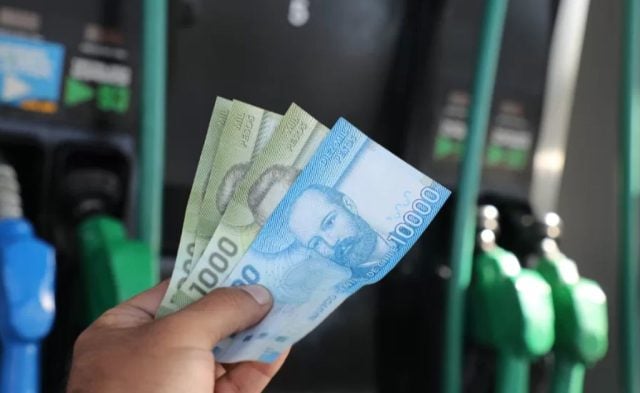
Oil market volatility has been the central theme in recent days. Just a week ago, Brent crude prices hovered around $70 per barrel, following a memorandum of understanding between Tehran and Washington. This prompted the National Oil Company (Enap) to report a significant reduction in fuel sales. At that time, prices for 93 and 97 octane gasoline dropped by nearly $100 per liter, while diesel saw an even greater decrease of over $155. However, this financial relief was insufficient to offset the effects of the «gasoline hike» at the end of March, triggered by the government of José Antonio Kast’s decision to modify the Fuel Price Stabilization Mechanism (MEPCO), shifting the cost of the hike to consumers.
The scale is tipping once again towards an increase, following President Donald Trump’s declaration that the ceasefire agreement with Iran is over and the resumption of military offensives, launching attacks against the Persian nation that have resulted in 50 fatalities and 500 injuries in the past three weeks. The Republican magnate also reimposed a naval blockade on Iranian ports and vessels.
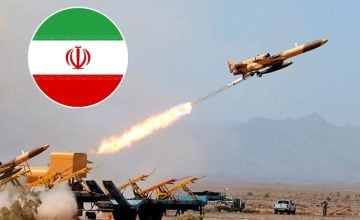
Iran has retaliated by bombing U.S. military bases in the Middle East, as well as targeting radar systems and aircraft of the North American nation. Concurrently, it has announced the closure of the strategically significant Strait of Hormuz, through which 20% of the world’s oil is traded, injecting a high «risk premium» into crude oil prices, as the mere reduction in maritime traffic and uncertainty about the immediate future have already pushed up prices.
The market is preparing for a scenario of restricted supply, which is expected to have a direct impact on the parity prices that Chile uses to set fuel costs.
Projected Increase of $30 per Liter of Gasoline
Economists consulted by Emol forecast a significant increase in the scheduled adjustment for July 30. Juan Ortiz from the OCEC-UDP warned of an approximate rise of $33 per liter for gasoline.
“Considering the changing landscape in the oil market due to renewed limited attacks between the U.S. and Iran, which have significantly impacted traffic through the Strait of Hormuz, we can predict that by July 30, gasoline and diesel prices are likely to rise,” he stated to the cited media outlet.
“In terms of gasoline, the increase should be around $33 per liter, and for diesel, approximately $28 per liter,” he explained, conditioning this scenario on the continued operation of MEPCO, provided that the Ministry of Finance under the direction of Jorge Quiroz does not implement any changes.
Meanwhile, Jorge Hermann from the University of Chile supported this estimate with a similar figure, around $30 per liter.
“Based on an oil price of $85 per barrel and an exchange rate of $925, a $30 increase is projected for Thursday, July 30, taking into account the operation of MEPCO, where parity prices are within the price band,” he noted.
Josefina Romo from the macroeconomic coordination of Clapes UC also anticipates that if the current level of crude prices continues, gasoline and diesel should experience increases in the adjustment on July 30.
She indicated that while “the evolution of the conflict in the Middle East remains highly uncertain,” it is possible that it could significantly alter “crude values in the coming days.”
The outlook is volatile and will depend on decisions and actions from Washington and Tehran, but for now, the message is clear: fuel price stability is fading with each attack between the two nations.
Obtén tu Pasaporte y apoya a El Ciudadano
Elimina la publicidad, accede a contenido exclusivo y sé parte de la comunidad.
Cancela en cualquier momento · Sin permanencia
Artículos Relacionados

U.S. Raises $13 Billion from Venezuelan Oil, Offers Only $300 Million in Earthquake Aid
Hace 3 meses