Senator Campillai Speaks Out Against Bill to Release Prisoners Over 70 Due to Health Issues
Senator Fabiola Campillai reiterated her strong opposition to a proposed law introduced by right-wing lawmakers. This legislation aims to allow the release of prisoners over 70 years old suffering from terminal illnesses.
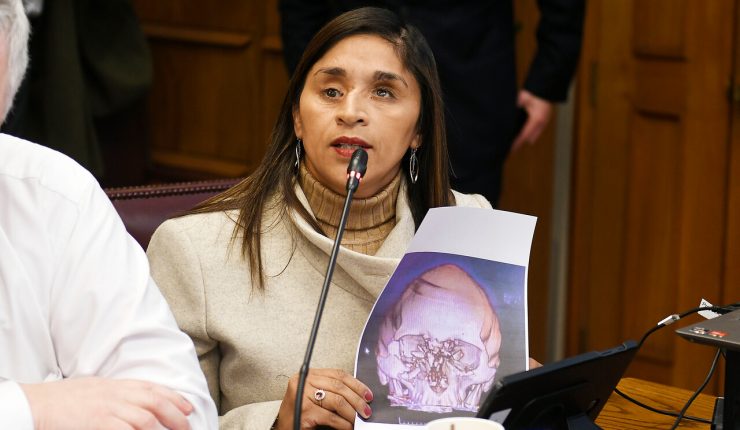
«We are resuming work in the Senate after the legislative break where, regrettably, we face another attempt to vote on and approve this harmful project,» stated the legislator, who requested that the vote on the initiative be postponed, a request that was accepted according to regulations.
For Senator Campillai, «it is undeniable that our prison system requires urgent reforms; the security crisis is certainly the top priority that citizens from every corner of Chile demand we resolve decisively. However, in light of this urgency, we must ask ourselves: how does the demand for greater security align with a bill whose only real effect is to release highly dangerous criminals?»
At this point, the parliamentarian asserted that «this proposal will be dressed in ‘humanity’, appealing to the age or health status of inmates. But let us be clear: health condition does not erase the seriousness of the crime and cannot be a bargaining chip to dismantle the rigor of justice. True humanity lies in protecting victims and not in granting impunity to perpetrators,» emphasized Senator Campillai.
Bill Tailored for Punta Peuco Inmates
As previously reported, multiple voices have warned that this bill is made «tailored» for inmates of Punta Peuco, many of whom are over 70 years old and serving various sentences for human rights violations during the military dictatorship (1973-1990).
In this regard, Senator Fabiola Campillai reiterated that the proposal is part of an «evident political strategy.»
«We must be fully aware of the seriousness of this project. We are not only facing an act of re-victimization of men, women, and children but also an evident political strategy. This initiative appears designed to pave the way for an agenda of impunity under the incoming government, which will not hesitate to use this law to free humanity’s criminals and, with them, open the doors to rapists, murderers, and pedophiles,» stated the legislator.
«Legislating to free criminals is a betrayal of the protective mandate we owe to the country. Our priority must be the superior welfare of victims and Chilean families who cry out for justice and real security,» insisted the senator from the Metropolitan Region.
It should be noted that this controversial bill was introduced by right-wing senators Francisco Chahuán, Luciano Cruz-Coke, Alejandro Kusanovic, Luz Ebensperger, and Carlos Kuschel, and does not have the support of President Gabriel Boric’s government.
Justice and Human Rights Minister Jaime Gajardo explained that the proposal contradicts the Rome Statute and the jurisprudence of the Inter-American Court of Human Rights, ratified and adhered to by Chile since 2009.
The minister provided decisive figures on this matter: among the potential beneficiaries, there are 370 convicted of crimes against humanity and 365 convicted of common crimes. Within the latter group, 192 inmates are serving sentences for sexual abuse; 155 for rape; 27 for homicide; and 5 for parricide.
In defense of the proposal, Senator Francisco Chahuán stated that it «does not pursue impunity but rather the humanization of criminal punishment,» particularly for those offenders with terminal illnesses, allowing them to face a «dignified death» at home.
We will continue to provide updates. Read more about this issue:

The Citizen
Relacionados

"Path to Barbarism?" Outcry Erupts Over Republican Deputy Meza's Proposal to Free Criminals and Rapists
Hace 3 meses


Human Rights Groups Demand Resignation of National Director of Gendarmerie Following Controversial Benefit Granted to Ex-Carabinero
Hace 4 semanas