Original article: Las mujeres de acero en Hungría tras la Oficina Nacional de Recuperación y Protección de Activos (NVVH): las juristas para perseguir la red Orbán
As the lights in the Hungarian Parliament dimmed on a Friday evening, a significant decision was sealed. The «Steel Women» of Hungary, associated with the National Asset Recovery and Protection Office (NVVH), are political scientist Anna Róza Unger and prosecutor Katalin Tasnády, who were appointed to lead the newly established NVVH. This office is intended to dismantle the power structure built by Viktor Orbán over the past sixteen years, as envisioned by Prime Minister Péter Magyar.
Unger was appointed president with 137 votes in favor, seven against, and one abstention. Tasnády received 139 votes as vice president responsible for investigations. Both officially took their positions on September 1, 2026, with a non-renewable six-year mandate.
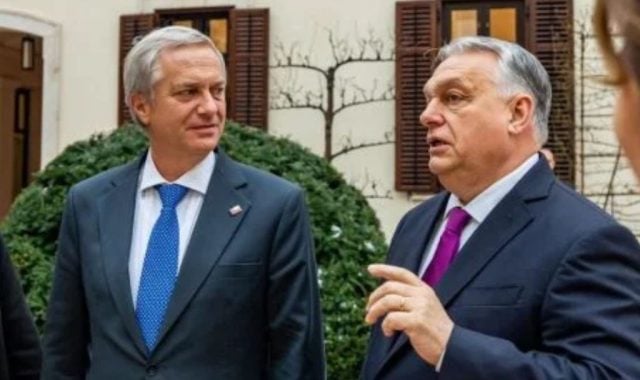
It is notable that José Antonio Kast has been closely linked to the Political Network for Values (PNfV), an international network of conservative leaders focused on defending life, family, and so-called fundamental freedoms. Kast has been part of the organization since 2015, moving to its advisory board in 2019 and assuming the presidency in March 2022, succeeding Katalin Novák, a key figure in Orbán’s government.
By the El Ciudadano Team
The Strategist and the Executor
The division of responsibilities between the two women is clear. Unger, an associate professor at the Eötvös Loránd University Faculty of Social Sciences and a specialist in authoritarian systems and «captured states», provides the intellectual framework. In her parliamentary appearance, she made it clear that the office should not limit itself to individual cases but should examine the political and institutional mechanisms that have facilitated the alleged plundering of public resources.
On the other hand, Tasnády is the practitioner. With twenty years in criminal law—sixteen of which were spent in investigative and prosecutorial agencies—she has climbed the professional ladder from the district police station in Buda to the Central Investigation Prosecutor’s Office. Those who have worked with her describe Tasnády as an «extremely dedicated prosecutor, with great work ethic and meticulous», yet approachable and accessible. «She is the prosecutor who always answers the phone,» judicial sources cited by Népszava indicate.
Prime Minister Magyar himself stated unequivocally on Facebook that Tasnády is «probably the most important leader of the office». Unger has confirmed that Tasnády will decide which case will kick off the first investigation, slated for late September.
Composition and Structure
The NVVH is led by one president and four vice presidents, who together form the supreme decision-making body. The four vice presidential positions are specialized by areas:
- Vice President for Investigation: currently held by Katalin Tasnády, responsible for specific inquiries.
- Vice President for Prosecution: vacant. Requires status as an active prosecutor.
- Vice President for Appeals: vacant. Also requires active prosecutor status.
- Vice President for Public Finances: vacant. The candidate must demonstrate at least fifteen years of experience in the tax or customs authority.
At the beginning of operations, three of these four positions remained unfilled. The candidacy for public finances was declared invalid, while the positions for prosecution and appeals were left vacant due to a lack of eligible candidates. On September 9, the parliamentary Justice Committee decided to reopen the selection process, with only two technical wording adjustments.
Unger has set a target of having approximately 150 employees in the initial workforce, of which half will be directly involved in investigative work. The recruitment strategy does not involve mass hiring from outside but rather through transfers, assignments, and service commissions from professionals already trained in other institutions: police officers, tax authority inspectors (NAV), and prosecutors.
However, this strategy clashes with reality. The NVVH’s planned staffing is around 200 employees, a number that experts in economic crime investigations consider «insufficient». It is estimated that the number of investigative prosecutors with adequate experience should be between 50 and 80.
Functions and Competencies
The NVVH serves a dual role: as a financial investigative body and as a public prosecutor with full powers.
Asset Investigation
The NVVH can initiate a «public asset protection investigation» without the need for a suspicion of crime. Its scope includes central and municipal budget management, the utilization of loans and subsidies (including EU funds), gratuitous transfers of assets, management of state and municipal property, and the asset activities of public ownership entities.
If a company and its affiliates have obtained public contract revenues, concessions, state bids, grants, national or EU funds, or state-guaranteed loans that together account for 75% or more of their total revenues in the past five years, the NVVH must initiate an investigation. This means sectors reliant on public funds—especially defense and civil engineering—will face significantly heightened scrutiny.
The NVVH has broad access to data: land registry, state digital systems, fiscal, customs, and health information. Public bodies are required to transfer data to the NVVH. If anyone obstructs an investigation, the office can impose fines of up to 50 million forints for individuals and up to 5 billion forints for legal entities.
Criminal Jurisdiction
The most controversial power of the NVVH is its ability to take on cases and act as a public prosecutor. It can withdraw a case from the Prosecutor’s Office, continue the investigation independently, and present charges before the courts.
In cases it takes on, the NVVH can conduct preparatory investigative acts and use covert means, oversee the legality of investigations and direct inquiries, order police to execute procedural acts, and act as a public prosecutor, substituting the Prosecutor’s Office. The law states that there is no appeal against the NVVH’s decisions regarding the assumption of powers, and the Prosecutor’s Office is automatically excluded from the case.
Precautionary Measures
Even before a criminal freezing order is issued, the NVVH can subject a company to public asset protection supervision. The designated supervisor can control the company’s operations, co-sign its financial commitments, and automatically invalidate those that lack their signature.
Budget and Salaries
The NVVH has its own budgetary chapter and reports only to Parliament. It has received 2.48 billion forints in startup funds, transferred from the central budget surplus. Of this, 1.049 billion is allocated for investments, 791.9 million for personnel salaries, and 537.9 million for operational expenses. The use of funds must be justified item by item, and any unspent money must be returned.
Salaries are high: Unger receives 5,017,810 forints gross monthly (about 13,000 euros), and each vice president approximately 3.94 million. The leadership team alone costs the treasury about 249.5 million forints annually, in addition to the salaries of 150 employees.
Context: The Magnitude of Systemic Corruption
The creation of the NVVH responds to a central promise in Magyar’s campaign. The government stated when presenting the bill that, even under the most conservative estimates, 30 trillion forints (around 75 billion euros) have migrated from public coffers to private hands over two decades. Hungary has repeatedly been cited as the most corrupt country in the European Union by Transparency International, and Brussels has withheld billions in EU funds precisely due to shortcomings in combating corruption.
Skepticism and Resistance
Not everyone is celebrating. Fidesz and KDNP voted against the creation law and absented themselves from the selection process, labeling the new agency as «revived ÁVH»—a reference to the feared secret police of the communist regime. During parliamentary debate, opposition MP Latortzai Csaba claimed that the NVVH’s powers «the ÁVH didn’t even have».
Surveys are also not encouraging. A Europion poll revealed that 57% of Hungarians do not feel informed enough to judge Unger; among those who have formed an opinion, the ratio is roughly two to one against. Even among voters of Tisza, Magyar’s party, opposition slightly outweighs support.
The selection process has also been called into question. Former independent MP Ákos Hadházy obtained the complete list of 96 candidates and their resumes, arguing that according to objective scoring criteria, Unger «would not have placed even in the top sixty». He accuses the Justice Committee of «not having seriously reviewed the majority of applications». The committee chair, Hantosi István, acknowledged that an objective scoring system was not applied in the process, but that committee members decided subjectively—scoring from 1 to 3 points—who would move on to interviews. Within Tisza itself, some dissenting voices suggest that the position should have gone to an experienced prosecutor, not a political scientist.
Unger has attempted to manage expectations: «I know everyone expects the click of handcuffs, but first, we need to establish the NVVH.» She has also warned that it would be «unrealistic» to expect firm sentences in all major corruption cases within her six-year term.
The final office headquarters will be located on Markó Street, in the building currently occupied by the Kúria (Supreme Court), alongside the Attorney General’s Office. However, the move will not take place until 2027. Until then, the NVVH operates in temporary offices, without a bank account or its own statistical number.
El Ciudadano
Obtén tu Pasaporte y apoya a El Ciudadano
Elimina la publicidad, accede a contenido exclusivo y sé parte de la comunidad.
Cancela en cualquier momento · Sin permanencia