Original article: Steinmeier en China: Alemania busca estrechar la cooperación tecnológica con Beijing en medio de las tensiones comerciales con Europa
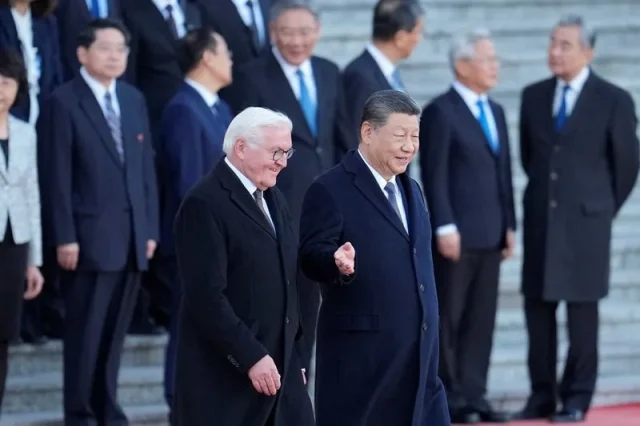
German President Frank-Walter Steinmeier’s state visit to China, from October 27 to 31, 2026, sent a strong message that transcends diplomatic protocol: Germany acknowledges China’s significance as a technological, industrial, and economic power and sees the necessity of maintaining strategic cooperation with Beijing, even in a context of rising trade tensions and competition between the two economies.
His tour of innovation centers, industrial facilities, and cultural heritage sites, along with his remarks at Peking University, highlighted an approach that combines recognition of Chinese advancements, advocacy for German industrial interests, and a commitment to keeping dialogue channels open.
Additionally, this marked the first state visit by a German president to China in nearly eight years, following the last visit in 2018.
Steinmeier’s visit coincided with German Chancellor Friedrich Merz’s Asian tour, where he visited Singapore, Japan, and South Korea from October 26 to 30.
Volkswagen in Hefei: German Industry Acknowledges Chinese Technological Leadership
One of the most significant moments of the trip was the visit to Volkswagen Group China Technology (VCTC) in Hefei, Anhui province.
The choice of location was intentional. Hefei has emerged as a key hub for China’s technology and automotive industries, housing Volkswagen’s largest research and development center outside Germany.
This facility signifies a crucial shift in the German manufacturer’s historic strategy. It is no longer just about producing vehicles in China for domestic markets; it is about developing technologies, automotive platforms, and digital solutions on-site.
In November 2025, Volkswagen announced the completion of an expansion of its Hefei facilities, which included:
- Over 100 advanced laboratories.
- Approximately 100,000 square meters of research and testing facilities.
- Integrated development of software and hardware.
- Testing of batteries, propulsion systems, and complete platforms.
- Development of driver assistance systems and remote software updates.
The company stated that this infrastructure would allow them to reduce development times for new vehicles by up to 30%. It also highlighted that, for the first time in its history, it could fully develop and validate new automotive platforms outside Germany.
The German president particularly emphasized the collaboration between engineers from both countries in automotive software development.
This episode reflects a fundamental transformation: China is no longer seen merely as a sales market or manufacturing base but is becoming a center of innovation that major European companies depend on to maintain their competitiveness.
For Volkswagen, adapting to the rapid pace of innovation in the Chinese market is a matter of survival against local competitors.
An Economic Relationship Germany Cannot Afford to Lose
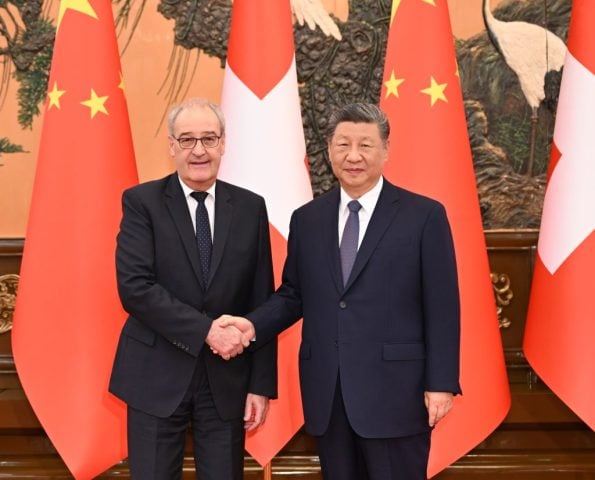
On October 30, Steinmeier was received by Chinese President Xi Jinping at the Great Hall of the People in Beijing.
During their meeting, Xi stressed the need to establish a new paradigm of cooperation between the two countries based on equality, mutual benefit, and strategic stability.
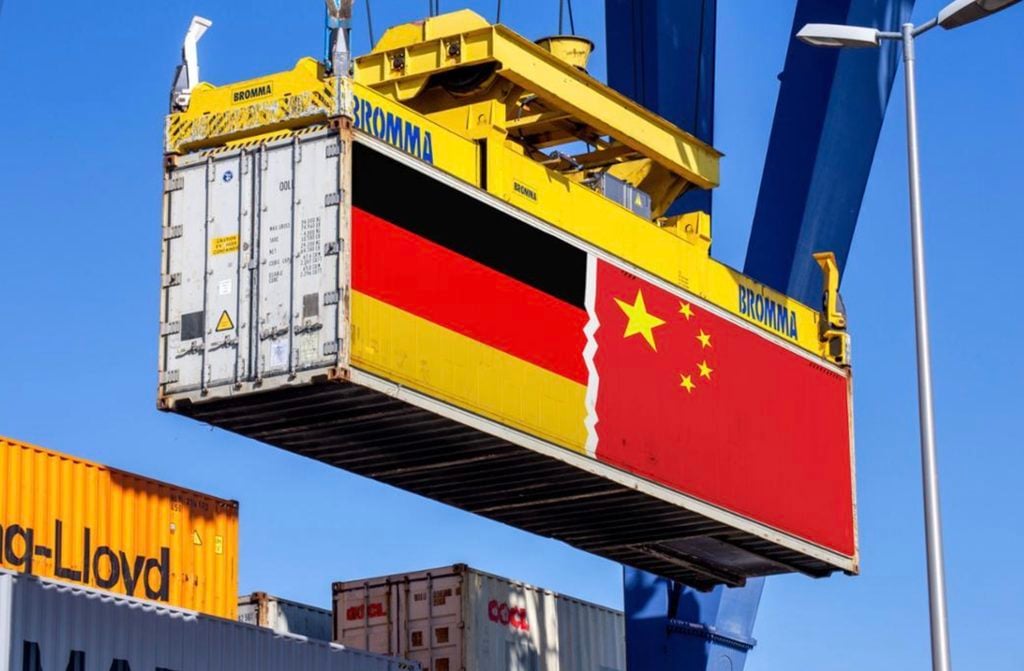
The Chinese leader noted that Germany and China, as two of the world’s largest economies, have a significant responsibility in shaping relations between China and Europe and ensuring global economic growth stability.
Xi also expressed Beijing’s willingness to deepen its comprehensive strategic partnership with Germany and contribute to a fairer global governance system.
This meeting was particularly important as both governments aim to prevent trade differences from escalating into political confrontations.
Steinmeier also met with Chinese Prime Minister Li Qiang, where they discussed Germany’s concerns regarding China’s trade surplus and how Germany might offer something that China lacks.
The German president emphasized that recent agreements on hybrid vehicle exports to the European Union demonstrated the potential for resolving complex economic disputes.
El Ciudadano
Obtén tu Pasaporte y apoya a El Ciudadano
Elimina la publicidad, accede a contenido exclusivo y sé parte de la comunidad.
Cancela en cualquier momento · Sin permanencia