Original article: Ni 24 horas ni carta blanca: Suprema ordena a Rabat resolver «a la brevedad» solicitud de rebaja de condenado por violar a una niña
Supreme Court Orders Immediate Decision from Justice Minister Rabat on Sentence Reduction Request for Child Rapist
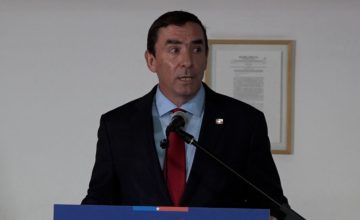
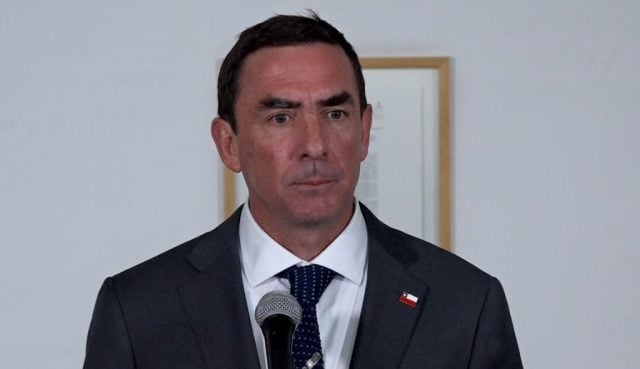
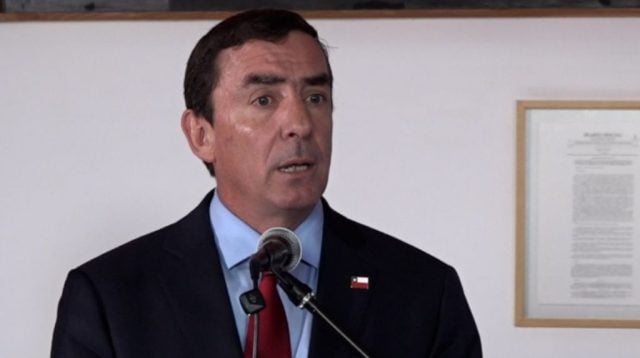
The Supreme Court made it clear to Justice Minister Fernando Rabat that he does not have a 24-hour deadline or a blank check. He must resolve «promptly» whether to approve or deny a request for sentence reduction from a convicted child rapist.
The case involves Víctor Manuel Alarcón Torres, aged 54, who was sentenced in 2024 to one day in prison for the repeated rape of his partner’s daughter between 2018 and 2021, when the victim was aged between 10 and 13 years.
Currently, Alarcón is incarcerated in Limache prison. However, on Tuesday, November 17, the Second Chamber of the Supreme Court upheld a ruling from the Valparaíso Court of Appeals, which accepted a habeas corpus petition presented by the convict’s defense due to the Justice Ministry’s lack of response.
This development coincided with a decision announced by Rabat on October 23, to suspend reductions for convicts of sexual crimes against minors, amid the judicial and political crisis triggered by the disclosure of 56 decrees issued by the ministry during his tenure, which granted benefits to 27 individuals convicted of sexual abuse and 29 for rape.
These reductions were applied under the so-called «Rabat doctrine», which refers to the 2022 legal reform that excluded those convicted of certain sexual offenses against minors from accessing these benefits. According to the Secretary of State, this restriction cannot be applied to acts committed before the law’s enforcement due to the constitutional principle that prohibits retroactively applying criminal law to the detriment of the convict.
Following this logic, all individuals convicted prior to that date may request a reduction if they meet certain criteria, and the State would be obligated to grant it.
In light of the scandal’s magnitude, on November 9, the government under José Antonio Kast chose to extend the freeze on sentence reductions for all crimes while pushing for a reform aimed at eliminating this mechanism.
In Alarcón’s case, although he was initially excluded by the Valparaíso Sentence Reduction Commission, his defense successfully argued for reinstatement in the evaluation process due to the nature of the crime and he was rated as having outstanding behavior.
According to his lawyers, with the accumulated reductions, the convict for sexually assaulting a child would have been released from Limache prison on October 26, but this did not happen as the Justice Ministry had not issued a resolution, prompting them to file a new habeas corpus petition.
Subsequently, on November 5, the Valparaíso Court ordered the request to be resolved within 24 hours, and Rabat’s department decided to appeal, claiming that the legislation does not specify a specific timeframe for a decision.
Supreme Court Orders Rabat to Resolve «Promptly»
The Supreme Court confirmed the appellate court’s ruling in Alarcón’s case and stated that the Justice Ministry must «promptly either grant or deny the request for recognition of the sentence reduction benefit» according to Law 19.856 and its regulations, as reported by Emol.
Given this situation, Minister Rabat must address the request for sentence reduction for the individual convicted of repeatedly violating a child, while concurrently managing the constitutional accusation filed against him by opposition lawmakers.
The document outlines three chapters: the first addresses 56 decrees granting sentence reductions; the second discusses reductions given to three convicts for crimes against humanity committed during the dictatorship; and the third points to potential violations of the principle of probity by Minister Rabat, due to providing incomplete or inaccurate information in his statements before Congress and in public remarks.
Obtén tu Pasaporte y apoya a El Ciudadano
Elimina la publicidad, accede a contenido exclusivo y sé parte de la comunidad.
Cancela en cualquier momento · Sin permanencia
Artículos Relacionados
Is Rabat Acting as Justice Minister or Protecting Pedophiles? Daza Accuses Kast Government of Favoring Child Abusers
Hace 4 semanas