Original article: La cara oculta de la Evaluación Docente en Chile
By Maximiliano Heeren Herrera (U. de Los Lagos) and María Clara Rivas Rivas (U. Católica de Temuco)
In recent months, humanity has marveled at the hidden side of the Moon, revealing a surface marked by craters, colors, and minerals that tell a different story than we once imagined.
Excited scientists echo the sentiments of the Artemis II astronauts: “it’s brown”; “it has craters that are actively erupting”; “distinct colors suggest the presence of olivine”; “the Earth looks even more beautiful.”
Recent explorations have allowed us to appreciate details previously known only through scientific instruments, awakening new questions and a collective sense of wonder.
This discovery reminds us that what remains hidden is not just an extension of the visible but a reality of its own that transforms our understanding of things. This serves as an invitation to surpass prejudices and to revalue the human experience of observing, interpreting, and being amazed.
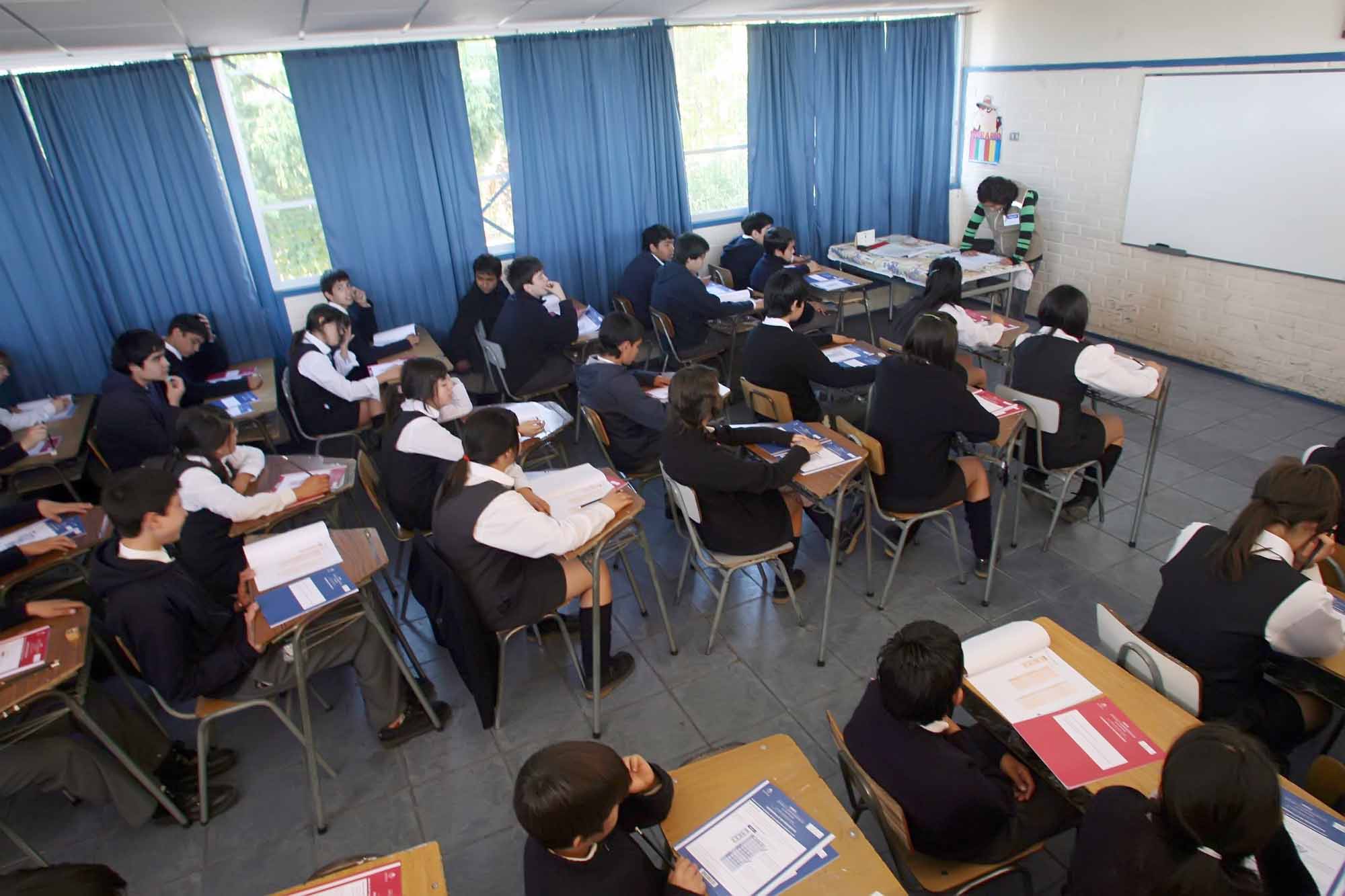
The visible face of the Moon shows us that educators, researchers, and decision-makers agree that our current teacher evaluation system contributes very little to improving the quality of instruction and student learning amid the various educational contexts in our country.
In fact, reports indicate a stagnation in mathematics, while reading remains at similar levels as in 2023, revealing that 36% of students fell into the inadequate category, meaning that more than one-third did not achieve the minimum expected learning outcomes.
In Chile, according to the National Education Quality Report, 27% of students report feeling excluded at some point during their schooling, and 18% of institutions still do not implement effective inclusion policies.
Therefore, let us examine what is not shown: what the apparent clarity of the curriculum and evaluative processes does not include. It is audacious to turn around and check if what we teach embraces what our programs have overlooked due to ignorance.
On the other hand, the hidden side could be what the national evaluation system does not encompass. There is a pressing need for evidence of the contributions educators make to student learning from various areas of knowledge to be part of the teacher evaluation systems, alongside evidence of their sustained pedagogical practices over time.
A self-assessment that reveals that unknown side of teachers across the diverse educational realities in the country.
In this sense, the question of how much merit – and responsibility – to attribute to educators concerning their own results remains a dilemma in the educational arena. To what extent does the result of teacher evaluation directly relate to the efforts of educators? What other factors can influence teacher performance in the various educational realities across the country?
The current teacher evaluation system in Chile has unveiled a high percentage of advancement in the teaching career, along with a strengthening of compensatory systems; however, there remains a hidden side where such incentives and professional recognition do not translate into direct effects on student learning outcomes.
This reveals that, despite the administrative and technical consolidation of the teacher evaluation system in Chile, there remains a need to advance towards more contextualized, collaborative, and socioculturally relevant evaluation models.
The MIRAS project (Millennium for a Socioculturally Sensitive Evaluation), as its acronym suggests, attempts to see the complete circularity. The integration of knowledge as part of a sphere that must not ignore its other side: cultures, daily occurrences, and the diversity in worldviews.
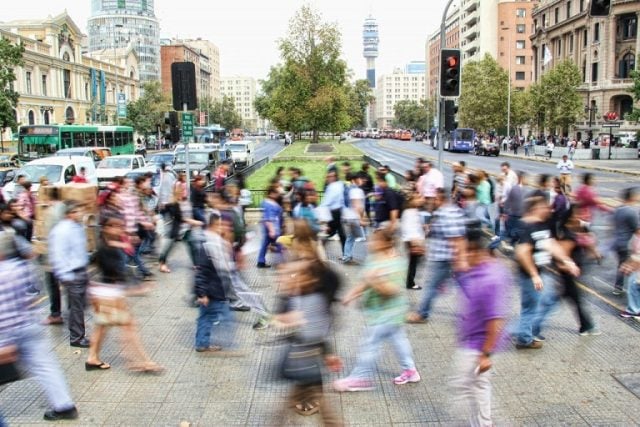
Currently, 12% of students in Chile belong to indigenous communities, and over 10% are migrants, highlighting the urgent need for a curriculum that incorporates cultural and linguistic diversity in its methodology and especially in its evaluative strategies.
The main findings from the MIRAS team suggest that evaluation is not culturally neutral; therefore, many evaluative practices end up reproducing educational inequalities rather than alleviating them.
Thus, they emphasize that sociocultural relevance is a condition for evaluative validity; that is, when an evaluation takes into account cultural practices, community knowledge, modes of communication, and reference frameworks inherent to the students, it becomes more valid.
Only by incorporating an evaluation that considers territorial, community, linguistic, and cultural knowledge will value be assigned to the communities and significance to the education of their new generations.
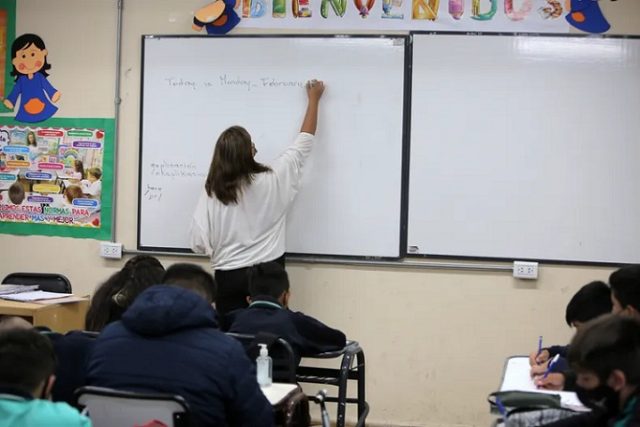
The classroom, like the Moon, is in constant rotation, and its darkness is perceived only by those viewing it from a singular perspective. What occurs in the classroom impacts identity, self-esteem, and sense of belonging—factors that evaluations often fail to reflect.
In this regard, evaluative decisions are not merely technical; they are also ethical and political, capable of strengthening or excluding certain cultural groups.
An evaluative approach that recognizes the sociocultural, linguistic, territorial, and cognitive dimensions in an integrated manner promotes comprehensive, equitable, and contextualized education, fostering the development of critical, social, and emotional skills through meaningful, contextualized, and culturally relevant learning experiences, incorporating the unique knowledge of various territories and highlighting different ways of constructing knowledge.
A socioculturally sensitive evaluation, as proposed by the MIRAS team, will acknowledge that any student performance is mediated by cultural and linguistic factors; thus, the validity of an evaluation will depend on its sensitivity to the sociocultural context.
This leads us to contemplate, design, and implement evaluative instances that consider the knowledge, experiences, and cultural practices of those involved in the learning experience. Thus, the evaluation will avoid reproducing inequalities, becoming a tool for recognition, participation, and the construction of an education aligned with the diverse educational realities of the country.
The circular journey of the Artemis II lunar expedition, during which the Moon blocked the radio signal with Earth for 40 to 50 minutes, teaches us that we must, for a moment, step away from the security of the known. Only then can we marvel at a continuous explosion of colors, valuable crystals, and ultimately, see the Earth as an even more beautiful place.
Maximiliano Heeren Herrera and María Clara Rivas Rivas
Obtén tu Pasaporte y apoya a El Ciudadano
Elimina la publicidad, accede a contenido exclusivo y sé parte de la comunidad.
Cancela en cualquier momento · Sin permanencia