Original article: ¿Quién controla a quién en Collipulli? Los vínculos familiares e institucionales que cruzan municipio, tribunales y organismos de control
Who’s in Control in Collipulli? Exploring Family Ties and Institutional Connections Among Local Authorities
The case aiming to oust Collipulli’s mayor, Manuel Macaya Ramírez, raises questions that extend beyond the mayor’s political future. A thorough review of judicial, municipal, and electoral records reveals a persistent presence of lawyers, relatives, and officials within oversight and decision-making bodies associated with the municipality.
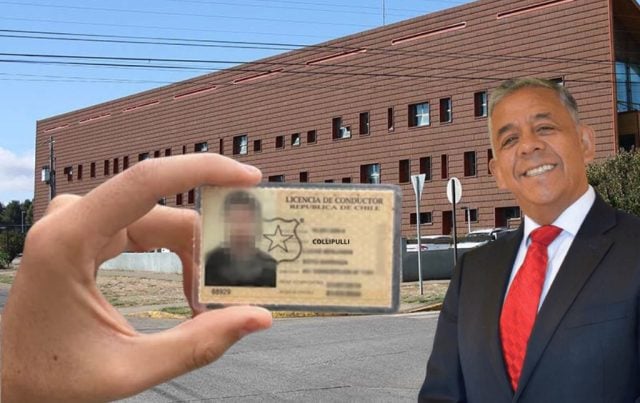
This report builds on prior findings by El Ciudadano concerning the driving license case and the professional ties surrounding municipal management (read the article here).
One of the identified institutional overlaps involves Luis Egisto Mencarini Neumann, a member of the Regional Electoral Tribunal of La Araucanía and one of the judges responsible for deciding on Mayor Manuel Macaya’s removal in case Rol No 35-2025, filed with the tribunal on July 14, 2025.
Simultaneously, his daughter, María Xaviera Mencarini Solervicens, was appointed Local Police Judge through decree No. 003523, signed by Mayor Manuel Macaya on December 1, 2025. Mencarini was part of a shortlist created by the Temuco Court of Appeals, ranking third after lawyers Michele Renee Caminondo Eyssautier and Pamela Manque Sánchez.
Mencarini received three votes during the full court session: from María Georgina Gutiérrez Aravena, Carlos Gutiérrez Zavala, and Alejandro Vera Quilodrán.
This information is significant as Mencarini is part of the Regional Electoral Tribunal of La Araucanía, the body currently handling the request against Mayor Macaya.
Another notable figure reappearing in this context is Alexis Gómez Valdivia, a substitute member of the Regional Electoral Tribunal of La Araucanía. El Ciudadano previously reported that Gómez defended Luis Toledo Rosales in the driving license case and later represented Macaya in other judicial matters. This holds significance due to his position as a substitute on the very electoral body tasked with reviewing the complaint against the mayor.
The connections even extend to the presidency of the Regional Electoral Tribunal itself. A certificate from the Temuco Court of Appeals, dated October 10, 2024, indicates that Alejandro Vera Quilodrán declared disqualifications regarding the Regional Electoral Tribunal of La Araucanía and several of its members and substitutes, including Luis Egisto Mencarini Neumann, Alexis Salvador Gómez Valdivia, Roberto Antonio Fuentes Fernández, and Alejandro Gustavo Fernández Jullian. The document notes that these disqualifications were still valid as of the date of issue.
Mayor Macaya’s defense in case Rol 35-2025 before the Regional Electoral Tribunal of La Araucanía is led by Fernando René Cartes Sepúlveda, who also serves as a lawyer member of the Temuco Court of Appeals. A certificate from that Court, dated December 15, 2025, notes that Cartes declared disqualifications regarding various individuals and institutions, including Luis Egisto Mencarini Neumann, a full member of the Regional Electoral Tribunal for the 2023-2027 term, who participated in the case Rol N.º 35-2025 and signed resolutions within that procedure from July 2025 to January 2026.
FERNANDO CARTES: QUESTIONS REGARDING HIS PARTICIPATION IN JUDICIAL MATTERS
Fernando René Cartes Sepúlveda appears in multiple judicial records reviewed for this investigation. While representing Mayor Manuel Macaya Ramírez before the Regional Electoral Tribunal of La Araucanía and the Constitutional Tribunal, he concurrently continues his role as a member lawyer of the Temuco Court of Appeals.
Cartes was also involved in a previously reported incident by El Ciudadano, where he requested to suspend a hearing before the Constitutional Tribunal due to difficulties arising from the storm in La Araucanía, while official records indicated he was present that same day as part of a panel in the Temuco Court of Appeals. However, the newly reviewed records add a different and broader controversy.
One of the challenges is documented in the Protection case Rol 575-2026, filed against the Municipality of Collipulli. In this case, Cartes served as a member lawyer and was appointed as the drafter of the ruling that rejected the appeal brought against the municipality. Subsequently, the appeal challenged that ruling, arguing that Cartes was subject to a disqualification cause outlined in Article 195 No. 5 of the Organic Code of Courts because he maintained an active professional representation of Manuel Macaya Ramírez, the authority who issued the questioned administrative act. The appeal asserts that this circumstance should have been declared ex officio and jeopardized the right to an impartial tribunal.
Cartes also participated in a panel that decided not to grant the order to cease innovations in another case involving the Municipality.
These findings are particularly significant in a climate where national investigative journalism has scrutinized networks of influence linked to appointments within the Judiciary. A report by Reportea revealed conversations between Andrés Chadwick and Luis Hermosilla regarding judicial appointments and other strategic roles, including lawyers in various courts across the country and the Temuco Court of Appeals. According to that investigation, some of the proposed names eventually received appointments.
In light of the Collipulli findings, a fundamental question arises: how do the mechanisms of disqualification, transparency, and control operate in the face of professional or familial relationships among individuals performing roles in bodies linked to the same institutional controversy?
However, the records do not solely focus on the TER or the actions of member lawyers within the jurisdiction. The document review uncovers other overlaps within local institutions.
It also identified familial relations involving individuals connected to local institutions. Carlos Andrés Bustos Muñoz serves as chief prosecutor for the municipality, while the reviewed records show that his mother, María Magdalena Muñoz Molina, holds a position as First Officer of the Collipulli Court of First Instance and Guarantee. Additionally, Fernanda Mackarena Orellana Muñoz, hired by the Municipality during 2026, is part of the same family branch linked to the chief prosecutor.
Yet, these overlaps are not limited to familial ties. The document review also reveals the repeated appearances of certain professionals in various sectors of municipal institutions.
One such individual is Jairo Fernando González González. Municipal records indicate that he serves as the legal advisor of the Municipality of Collipulli and was also appointed Provisional Municipal Secretary through a decree signed by Mayor Manuel Macaya Ramírez. In this capacity, he acts as a minister of faith in sessions of the Municipal Council, participating in agreements, certifications, and other actions typical of the Municipal Secretary’s office.
However, the reviewed evidence reveals that this same professional is also involved in judicial proceedings related to municipal resources. In case RIT C-19-2022 he requested the seizure of funds that the Municipality of Collipulli owed to a contractor for services rendered to the municipality. Subsequently, a judicial certificate included in the case file confirmed the issuance of a check for $9,705,448 made out to Jairo Fernando González González in the context of this case.
Judicial documentation also indicates his participation in other actions related to municipal functions, including professional representation of authorities or municipal executives in judicial proceedings.
When considered collectively, these findings highlight a recurring pattern of professional, institutional, and familial relations among individuals who currently or previously held positions within the Municipality of Collipulli and within bodies tasked with overseeing, resolving, or intervening in matters concerning municipal management. It is precisely within this institutional framework that the Local Police Court re-emerges as another meeting point for several of the names observed throughout this investigation.
THE LOCAL POLICE COURT: A RECURRING MEETING POINT FOR THE SAME NAMES
The Local Police Court concentrates many of the professional and familial ties identified during this review.
Its presiding judge is María Xaviera Mencarini Solervicens, daughter of Luis Egisto Mencarini Neumann, a member of the Regional Electoral Tribunal currently participating in the case aimed at determining the political future of Mayor Manuel Macaya Ramírez. Her appointment was formalized through Mayoral Decree No. 003523, signed by Mayor Manuel Macaya on December 1, 2025. Mencarini ranked third in the shortlist generated by the Temuco Court of Appeals, having received three votes in the plenary session.
However, these overlaps do not end there.
The Temuco Court of Appeals reported that the substitute lawyers for the Local Police Court of Collipulli are David Araya Parraguez, Pablo Montre Rodríguez, and Yénifer Gatica Cabrera. Transparency records show that Pablo Montre Rodríguez and Yénifer Gatica Cabrera have contracts with the Municipality of Collipulli for legal support roles.
David Araya Parraguez had previously appeared in El Ciudadano‘s earlier investigation due to his familial, corporate, and professional relationships within the municipal structure. The new information shows that he also serves as the first substitute lawyer of the Local Police Court. Thus, the Local Police Court once again becomes a convergence point for names already noted in other areas of local institutions: Municipality of Collipulli, municipal legal advice, Regional Electoral Tribunal, the judicial system, and bodies tasked with oversight functions.
The institutional significance of these findings lies in the fact that many of these relationships converge in actions, appointments, and substitution mechanisms related to the Temuco Court of Appeals, which intervenes in various designation processes within its jurisdiction.
BEYOND COINCIDENCES
Individually, several of these connections may have legitimate explanations, and the gathered evidence does not permit a conclusion of violations. However, observed collectively, they reveal a recurrent convergence of familial, professional, and institutional relationships within bodies involved in decisions linked to Collipulli.
The fundamental question is not to anticipate responsibilities that belong to the courts and oversight bodies, but to establish whether the mechanisms of disqualification, transparency, and control are sufficient to safeguard institutional independence and public trust.
The repeated connections among professionals, relatives, and institutions involving individuals engaged in various sectors of local governance justify, in and of themselves, public scrutiny regarding the functionality of transparency, disqualification, and oversight mechanisms.
El Ciudadano
Obtén tu Pasaporte y apoya a El Ciudadano
Elimina la publicidad, accede a contenido exclusivo y sé parte de la comunidad.
Cancela en cualquier momento · Sin permanencia