Original article: Chile y la diáspora palestina: El cine como acto de memoria
By Carolina González López, actress, heritage manager, and member of the Chaski Audiovisual Laboratory
Discussing diaspora is not merely an exercise in nostalgia; it is a form of resistance against forgetting and colonial violence that seeks to appropriate not only territories but also the memories and narratives of self-identifying peoples. Colonialism aims to fragment collective memory to establish opinion matrices that legitimize its interests.
From our standpoint within the Global South, the peoples of Latin America and the Caribbean share a common wound with the territories of Western Asia and North Africa: colonization. This is why solidarity with the Palestinian cause and its resistance has become integral to the political reality of the region, stretching from the Rio Grande to Patagonia, including the Caribbean.
Internalizing foreign realities can be complex, but it is not impossible. Bringing certain contexts to the big screen presents a challenge in storytelling, as true commitment to the art form demands consideration not just of themes but also of forms, which have been learned from external agents to our Global South subjectivity.
In this regard, the challenge for filmmakers from the Global South is not simply to create films but to question where they are made. In non-hegemonic world communities, there is potential to challenge the monopoly of images and construct alternative perspectives. This endeavor is not just about offering an alternative narrative; it is about dismantling the colonial logics that have historically turned specific territories into subjects of observation rather than active participants in their own history.
In this context, documentary filmmaking evolves from being a mere record of reality to becoming a tool for memory, a living archive, and an act of solidarity between peoples sharing experiences of colonization and dispossession. This ethical quest is precisely what gives rise to the documentary «La Raíz del Olivo» (Cuba-Bolivia-Argentina-Lebanon), directed by Cuban-Bolivian filmmaker Sergio Eguino Viera in 2024.
The film tells the story of five Palestinians residing in Cuba. Through diaries and film letters, which are narrative resources of non-fiction, the director translates the everyday lives of Watan, Omaima, Murid, Baylasan, and Bassel into audiovisual language, amplifying their experiences against the backdrop of the ongoing genocide and occupation by the Zionist state of Israel, which has persisted for over seven decades.
Produced by the independent Chaski Audiovisual Laboratory, the film was largely realized through militant efforts, supported by the political commitment and collective work of its production team and the film’s protagonists. It received unwavering support from the press outlet Resumen Latinoamericano and the Tercer Mundo, which co-produced the film in collaboration with the pan-Arab media outlet Al-Mayadeen.
By presenting its protagonists engaged in routines marked by the ongoing effort to keep Palestinian identity alive as an act of resistance, the documentary emphasizes the rich culture of their people. Spaces, scents, flavors, and names are recalled in the diaries by the children of a diaspora refusing to sever ties with their homeland.
«La Raíz del Olivo» aims to preserve memories, reclaim identities, and build bridges between Palestine and Our America through a perspective shaped from the Global South. This documentary, by its very nature, becomes a political practice and a form of cultural internationalism.
The land of Palestine shares with Latin America and the Caribbean much more than a memory marked by colonialism. The largest Palestinian community in the diaspora outside the Arab world has settled in one of the southernmost territories of South America: Chile.
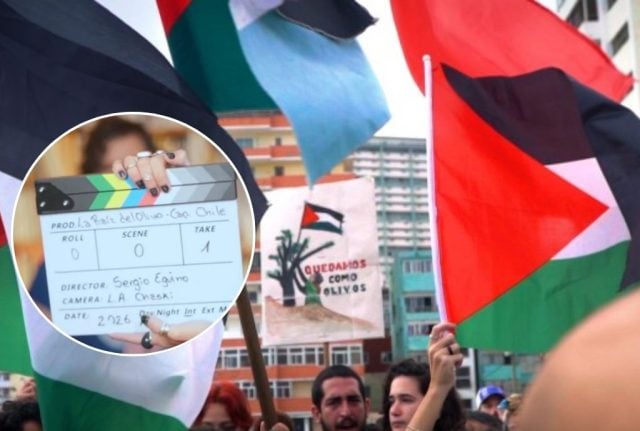
In Chile, generations have preserved their identity, culture, and Palestinian memory, serving as a living bridge between Western Asia and our America. It is precisely towards this territory that «La Raíz del Olivo» is currently directed. There, thousands of families have maintained their traditions, cultural heritage, and commitment to Palestine over generations, turning memory into a daily form of resistance.
Documenting this experience aims to expand the emotional map of the Palestinian diaspora in Latin America. It involves understanding how an identity crosses oceans, transforms over time, yet retains an unbroken bond with its homeland. It also acknowledges Chile’s role as a space for meeting, organization, and solidarity with the Palestinian cause.
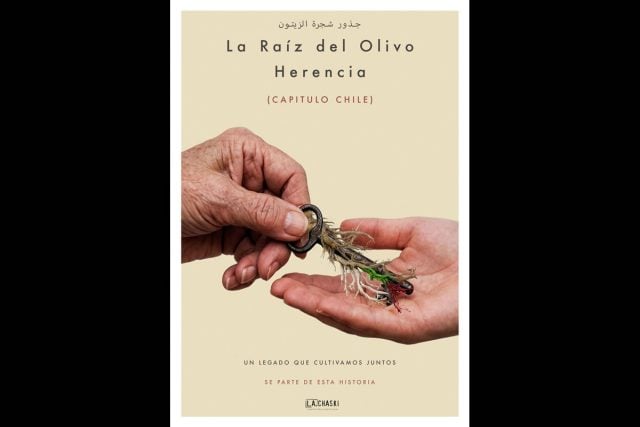
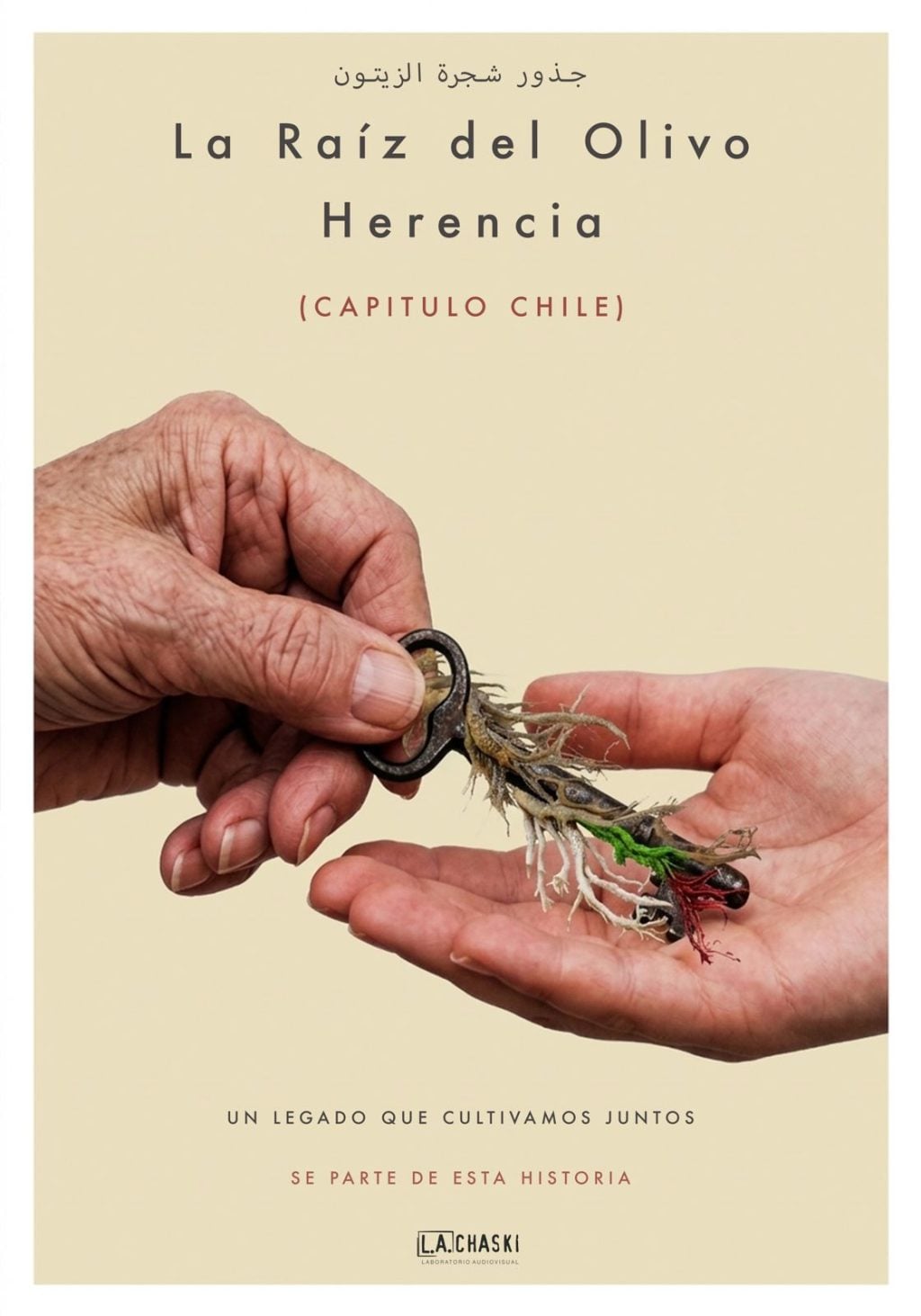
With this purpose, «La Raíz del Olivo: Chapter Chile» is born. As with the first film, the project is built on political commitment, collective work, and the conviction that cinema can be a tool for preserving the memory of peoples. However, pursuing an independent production of this nature also requires support from those who believe in an audiovisual medium committed to social struggles.
Therefore, the team has launched an international crowdfunding campaign, understood not merely as a funding mechanism but as an invitation to actively participate in the construction of this collective memory. Each contribution helps document a story that transcends the Palestinian community and forms part of the political, cultural, and human heritage of Our America.
Defending memory is also about preventing forgetting from becoming a tool of colonialism. And as long as there are peoples willing to narrate their own stories, cinema will remain a domain of resistance.
Obtén tu Pasaporte y apoya a El Ciudadano
Elimina la publicidad, accede a contenido exclusivo y sé parte de la comunidad.
Cancela en cualquier momento · Sin permanencia