Original article: Maxi Papandrea y la edición independiente: “Mantener la escala humana es indispensable”
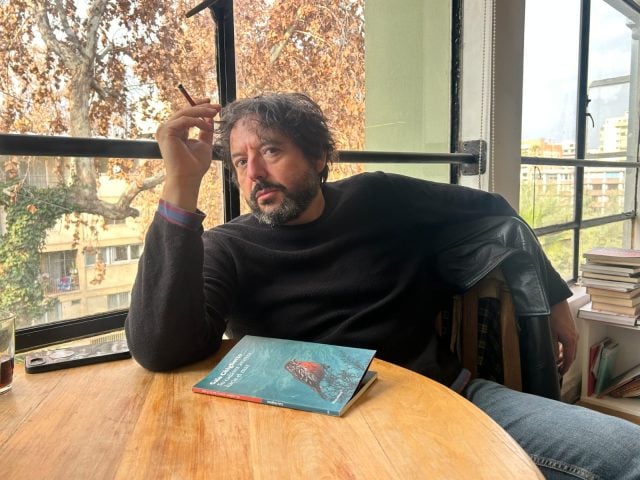
Maximiliano Papandrea, widely known as Maxi Papandrea, is the director and co-founder of Editorial Sigilo, an independent publishing house established in Buenos Aires in 2014. Sigilo has expanded beyond the Atlantic, with a Madrid office since 2018, allowing it to foster connections between both markets and enhance the circulation of its books.
Sigilo’s catalog primarily focuses on contemporary narrative, featuring Argentine, Latin American authors, and translated works from various languages. The catalog also includes an array of formats and genres, such as comics, chronicles, and essays. Additionally, Sigilo is committed to supporting emerging writers, creating space for new voices to begin their literary journeys.
Yet, to understand Sigilo, one must also know a little about Maxi himself. Raised in Wilde, Argentina, his literary journey didn’t begin at home; rather, it was somewhat serendipitous—sparked when he discovered a friend’s mother’s library at the age of 13. From that moment on, books opened up a world that had previously felt quite limited and ultimately became the path that led him to publishing.
Like many successful projects today, Sigilo didn’t start out in its current form. Previously, there was Páprika, a publishing house founded by Papandrea along with Claudia Arce and Andrés Beláustegui. The early years were challenging, and in 2015 they faced a significant setback when a planner company had already trademarked their name, forcing them to withdraw books from stores, change covers, and absorb the costs of rebranding under a new name.
Thus, Sigilo was born. Papandrea hasn’t walked this path alone; Adam Blumenthal, his current partner, joined the project in 2017 after relocating to Madrid, enabling the publication and distribution of books in both Argentina and Spain. According to Papandrea in various interviews, this decision arose not from a grand expansion plan, but rather from one of those unexpected opportunities that transform a project.
What’s notable in Papandrea’s narrative is the recurring theme of people appearing at opportune moments—conversations that open new doors and connections that shape projects that may not have existed otherwise. From writers and translators to booksellers, designers, agents, and fellow editors, independent publishing appears to thrive on these networks of collaboration.
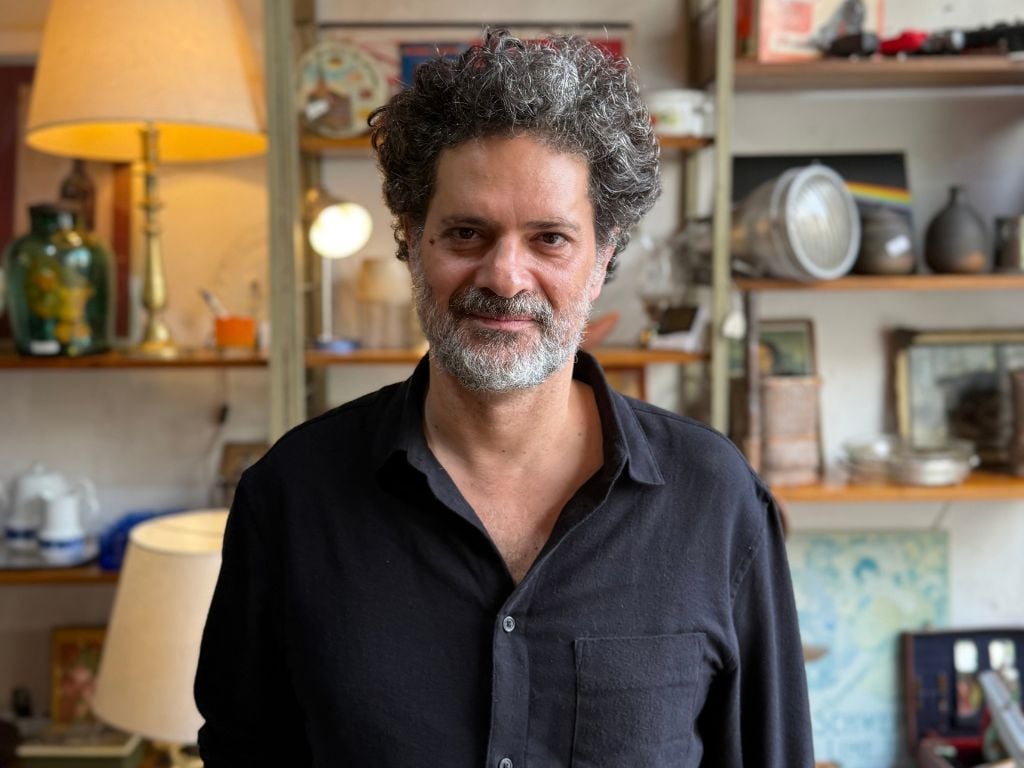
In this conversation, we spoke with Maxi Papandrea about Sigilo’s journey, the challenges of sustaining an independent publishing house in Latin America, the role of bookstores, and the networks that facilitate the circulation of books. We also discussed key projects that have defined the house, such as Cometierra by Dolores Reyes, and the publication of works by László Krasznahorkai, who received the Nobel Prize in Literature.
-Sigilo was founded in Buenos Aires in 2014 and now has a presence in Madrid. How has the project evolved since its inception, and what does it mean for you to have a presence on both sides of the Atlantic?
-The early years were beautiful but very challenging. Along with the predictable difficulties of any small publishing project without economic backing, except for initial capital (money my parents gifted me to buy a home, which I lost entirely within the first three years), I faced several errors that nearly sunk the publishing house a few times. For instance, a trademark conflict with the original name forced us to start almost from scratch. Today, it’s part of our history, our epic, and even the mystique of Sigilo. The move to Spain was not motivated by a desire for expansion but emerged naturally from the founding of the editorial house. Adam Blumenthal, who I co-direct, joined us in 2017 when he moved to Madrid (he was previously living in Israel, where he was born), so it made perfect sense to publish and distribute in both countries. It was one of the many crazy things we did, and fortunately, it turned out reasonably well. Publishing is quite different in each country, so the general decisions we make together are then “translated” into the context of each territory where we live and work.
-Independent publishing in Latin America faces challenges such as small markets, distribution issues, and concentration among large publishing groups. What are the main difficulties today in maintaining an independent project in the region?
-Each country has its specific problems. In Argentina, the main issue, I believe, is the recurring economic crises. The current crisis we are experiencing under this government is severe and affects not only our sector and other cultural enterprises (which are deliberately and explicitly targeted by this government) but the country as a whole. The significant decline in book consumption is seriously threatening neighborhood bookstores, which are numerous here, and consequently, independent publishers, who partially rely on them for support.
-Throughout your career, you’ve consistently had important people who helped pave the way: Marcelo Cohen, Jorgelina Núñez, Alejandro Ulloa, Benjamín Labatut, Adam Blumenthal, among others. What role do collaboration networks and personal connections play in building independent publishing?
-Today, the role of the editor enjoys unprecedented prestige; we are more visible than ever, probably due to the symbolic importance independent publishing has gained (and the necessity for us to publicly stand behind our modest projects). Yet, around editors there forms a network of women and men who contribute their art and craft, their labor, sensitivity, intelligence, and friendship. Writers, of course, but also translators, artists, designers, proofreaders, journalists, booksellers, colleagues, etc. It is a network of conversations; the richer and more varied this network is, the more beautiful and interesting the fruits of our labor become. For an editor, deciding is as important as listening.
-Sigilo works with Argentine authors, Latin Americans, and translations from various languages. What do you aim to achieve with the intersection of Latin American literature and works from other parts of the world?
-Our primary interest is in literary fiction and narrative, although we also enjoy venturing into other genres (right now, I’m finalizing a children’s comic by a Chinese artist featuring a girl and her cat). The literary history of local traditions has been shaped by translations and intersections, something we in the Argentine tradition understand well, thanks to Borges. (In fact, if I had to think of a model we aspire to in building our catalog, I would point to the eclecticism of Borges’ personal library: a detective novel alongside Cortázar or the Egyptian Book of the Dead). These intersections expand perspectives and are fruitful.
-Bookstores and distributors are also vital for the circulation of independent books. How are these networks built, and how important are they for a publishing house like Sigilo to grow?
-In Argentina, the network of neighborhood bookstores, small and medium-sized, is a fundamental part of the book ecosystem and the true cornerstone for a rich and diverse community of independent publishers. They are our allies, supporting and recommending our work, and they are the closest link to the community of readers. Independent distributors are a relatively recent phenomenon in this ecosystem. They emerged as an alternative to traditional distribution models, generally founded by the publishers themselves, and are allowing new projects, no matter how small, to reach bookstores with a level of ease and efficiency.
-Sigilo has published authors from those just beginning their careers to internationally renowned writers like Nobel laureate László Krasznahorkai. How does an independent publisher work with such significant authors, and what does it entail to take on such projects?
-László Krasznahorkai has been superbly edited in Spanish by the outstanding Acantilado for over twenty years. For various reasons, his books were not reaching Argentina effectively. His agent, with whom we had a very good relationship due to another book we had published, identified this issue and reached out to propose a collaboration. We knew him and had read his work, and we immediately agreed. The publication of the second book we contracted from him coincided with the Nobel Prize. It was a stroke of luck facilitated by an admirable literary agent we knew how to listen to.
-One of Sigilo’s most notable cases has been Cometierra by Dolores Reyes. What did you see in that manuscript when it arrived, and what did its success mean for the publishing house and its commitment to new Latin American authors?
-It was a turning point. When we read the manuscript, we sensed its power and were convinced it would make a considerable impact, that it would be widely read, but we never imagined the resonance would be on such a scale. It sold 90,000 copies just in Argentina. Best-sellers are mysterious phenomena, alignments of planets where we, as editors, play the role of vessels. It allowed us to scale our output from three or four books a year to nine or ten, opened doors to other markets, and provided a degree of relief in the always fragile and not very profitable «business» of publishing.
-After over a decade in publishing, what do you think independent publishing can contribute to the Latin American literary landscape that perhaps doesn’t always find a space in larger publishing groups?
-I don’t like to demonize large publishing groups. I started at nineteen working as a proofreader for a multinational and know from experience that there are valuable people doing valuable things everywhere. However, I believe independent publishers are the ones trying to keep alive the fire of this noble and beautiful craft of making books, the fire of the wonderful tradition of Ibero-American publishing from the twentieth century, which has been distorted in the process of acquisitions, mergers, and absorptions over recent decades, where the logic of corporate results and marketing-driven decisions prevails.
In corporations, the figure of the editor who curates a catalog has been blurred or extinguished. Maintaining a human scale is essential for the health of a publishing house because, at its core, it’s about making something as human as a book—which serves as a medium for words and images—by humans and for humans. Let’s hope it’s done with craftsmanship, truth, and beauty.
El Ciudadano.
Obtén tu Pasaporte y apoya a El Ciudadano
Elimina la publicidad, accede a contenido exclusivo y sé parte de la comunidad.
Cancela en cualquier momento · Sin permanencia