Original article: Boric rebate a Frei por Escudo de las Américas: “Chile mantiene una autonomía estratégica y eso se pone en riesgo”
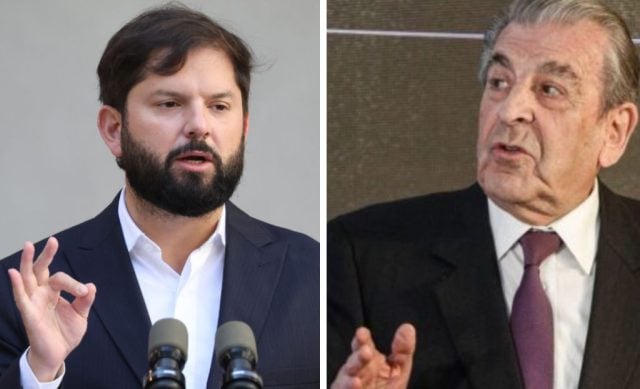
“Chile’s strategic autonomy is maintained, negotiating with everyone, with whomever is convenient to defend our interests based on certain principles that have continued since the return to democracy, and from our perspective that is at risk,” stated former President Gabriel Boric as he reaffirmed his opposition to Chile’s joining the Americas Shield, contrasting with the position of former President Eduardo Frei Ruiz-Tagle, who supported the decision of the government led by José Antonio Kast.
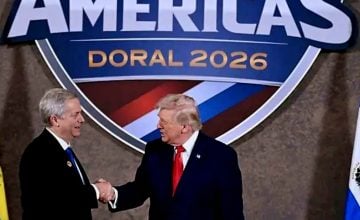
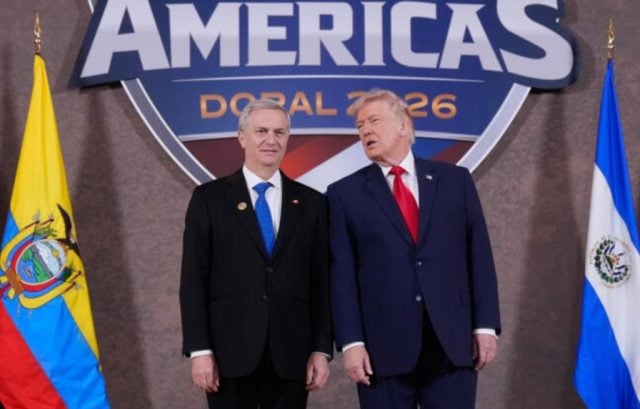
The controversy arose after a letter published last Saturday in El Mercurio, in which Frei —currently serving as Chile’s ambassador in a special ad honorem mission, appointed by Kast— defended the country’s inclusion in the mechanism promoted by U.S. President Donald Trump. He argued that it aims to strengthen regional cooperation against organized crime and drug trafficking, asserting that Chile “cannot remain on the sidelines.”
Frei stated that joining this initiative, which includes 14 right-leaning countries in the region, “opens concrete opportunities” for Chile. He mentioned opportunities such as: “sharing timely information, improving data analysis, training Carabineros and the Police of Investigations, and enhancing border coordination.”
With these assertions, the honorary ambassador sought to establish the idea that the adherence is a response to practical security needs, rather than a broader geopolitical alignment.
On his part, Boric responded this Sunday during the second day of MUDA, the Memory Festival organized by the National Stadium Memorial Corporation, where he coincided with former Presidents Michelle Bachelet and Eduardo Frei Ruiz-Tagle on the need for international cooperation to combat drug trafficking.
“He defends, albeit tangentially, the integration of Chile into the Americas Shield from the perspective of the importance of combating drug trafficking, but neither President Bachelet nor I indicated any disagreement with that,” he stated.
“We, and I believe all citizens, must be ready, and countries must cooperate with all nations to combat drug trafficking.
The contrast of views, according to Boric, emerges when examining the full content of the agreement. “What is the problem?” he asked, providing an answer: “the Americas Shield is not primarily about that; it also involves commitments regarding safeguarding supply chains of metals and critical minerals.”
In the former president’s opinion, that aspect exceeds the fight against drug trafficking and directly impacts Chile’s international stance.
In this regard, Boric linked the mechanism promoted by the occupant of the White House to a concept of continental security and continental sovereignty.
“What does that mean? Preventing, through a concept of continental security, continental sovereignty, other powers, namely China, from interfering or establishing relationships with the supply chains of critical minerals,” he said in statements picked up by El Mostrador.
He also mentioned the possibility of “incorporating defense mechanisms alongside foreign armies in the territory of sovereign nations.” In his view, those aspects are not being addressed when defending the Chilean incorporation into the Americas Shield.
The former president framed his concerns within a history of consensus in Chile’s international policy, noting that this legacy “relates to its integration into the world, with a willingness to engage and to forge alliances beyond the political cycles that have unfortunately been broken today.” He insisted that the discussion extends beyond a single government or situation, but touches upon principles that Chile has upheld since the return to democracy.
Boric Reaffirms Position on Joining the Americas Shield
It is worth remembering that on September 24, former Presidents Michelle Bachelet and Gabriel Boric signed a letter expressing their concern regarding Kast’s decision to confirm Chile’s adherence to the Americas Shield, stating that in the current geopolitical context, “Chile should not be forced to choose a side, but rather should strengthen its alliances and relationships with various countries and regions, without exclusions imposed from abroad and always preserving its strategic autonomy.”
“We call on President José Antonio Kast’s government to reconsider Chile’s involvement in this initiative and express our full willingness to collaborate in building state strategies to address transnational organized crime, while safeguarding the principles, sovereignty, and autonomy that have characterized Chile’s foreign policy since the recovery of democracy,” they affirmed in the letter.
It is also notable that Chile’s adherence to this mechanism driven by Donald Trump, has taken place amid criticisms regarding the abandonment of autonomy in foreign policy and the potential ceding of sovereignty in matters of security and defense. Additionally, a group of parliamentarians has demanded clarity from La Moneda regarding the scope of this measure and explaining what coordination will be established with other countries that are part of the initiative, considering a document published by the U.S. State Department revealed that beyond coordination to combat organized crime, the mechanism encompasses economic matters, such as the supply chains of critical materials, which exceed the realm of public security.
Boric’s response to Frei’s proposals aligns with the political and diplomatic trajectory of the former president, who served as president and later as ambassador in a special mission for the Asia-Pacific from Michelle Bachelet’s second term until April 2022. During his administration, Chile signed the Free Trade Agreement with Canada in 1997; joined as a full member of the Asia-Pacific Economic Cooperation Forum (APEC) in 1994; signed a Cooperation Agreement on Economic and Political Issues with the European Community in 1996 and that same year became an associate member of Mercosur.
Obtén tu Pasaporte y apoya a El Ciudadano
Elimina la publicidad, accede a contenido exclusivo y sé parte de la comunidad.
Cancela en cualquier momento · Sin permanencia
Artículos Relacionados
Public Opposition to Americas Shield Reaches 47% as Bachelet and Boric's Letter Gains 41% Support
Hace 3 horas