Original article: La no-ficción tiene su propia vía: El fantasma de las vidas ajenas de Carrère
By Luis Valenzuela Prado
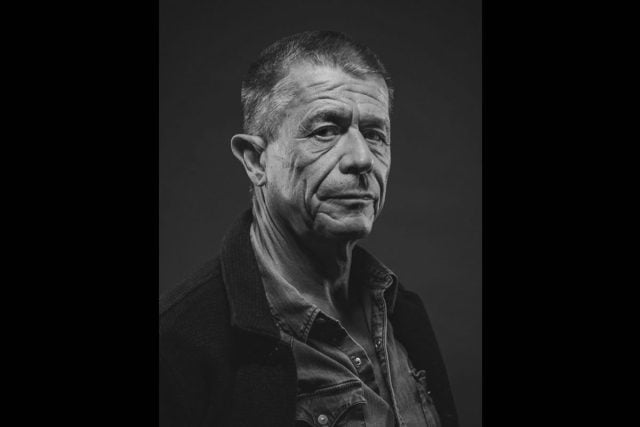
Emmanuel Carrère is a captivating writer who takes readers on meandering, unpredictable journeys through the realm of non-fiction.
The analogy is clear; his surname has Latin etymological roots that signify a path or a road. Carrère forges his own restless way, crafting enticing narrative non-fiction that leads us down various avenues.
Though he initially began writing fiction, he transitioned away from it, focusing solely on non-fiction, biographies, essays, chronicles, and even filmmaking.
The only piece of fiction I read, after consuming much of his non-fiction, was The Mustache (1986), in which a man silently shaves off the mustache he has worn for years. He intends to surprise his wife, but, unexpectedly, she reacts by saying he has never had one.
The novel glides through a plot intertwining paranoia and dark humor. Every reading conceals something behind the wall, much like good literature.
Then came non-fiction. A reader doesn’t always follow a linear path in their reading choices. I began without adhering to the original order, with Limónov (2011), a brutal narrative that is, above all, a fictionalized biography, where Carrère seamlessly combines the tools of a journalist and a novelist. He tells, informs, writes, and narrates.
The term narrative means «to bring back,» and indeed, I ponder, going backward is part of every story or Carrère’s journey. He argues that Limónov was not a fiction author; «he only knew how to narrate his life,» realistically recounting what happened before, but it was a fascinating life that he told well, with a simple, straightforward style, devoid of literary pretensions and infused with the energy of a Russian Jack London.
Carrère transforms into the image of his character, as he seeks to narrate effectively, simply, “without literary affectations,” which he undoubtedly employs. I note that two central themes in Carrère’s work are storytelling and the lives of others—those of strangers, his family, and even his own.
Limónov was an unusual character, and Carrère is intrigued by the lives of such beings. Limónov was a loudmouth in Ukraine, an idol of the Soviet underground, a homeless individual, a trendy writer in Paris, a soldier in the Balkans, and the leader of a party of desperate youth: «He saw himself as a hero and could be considered a scoundrel; I reserve my opinion on that point.»
This reservation addresses the strangeness previously presented and elaborated on in The Adversary (2000), an exemplary tragedy following the footsteps of In Cold Blood and likely Crime and Punishment.
Carrère recounts the haunting narrative of Jean-Claude Romand, a man who maintained a false identity as a WHO doctor for nearly two decades before murdering his entire family. The horror of human monstrosity.
The narrator, Carrère, delves into testimonies and reflections on how Romand’s social façade concealed a life of systematic lies and financial scams against his loved ones.
The Adversary presents a profile of a criminal monster stemming from the paradox of love and destruction, good and guilt. Why write about evil, horror, and death?
In De vidas ajenas (2009), he recounts his vacation days in Sri Lanka with his partner, Hélène, interrupted by a tsunami. He witnesses two deaths. Pain, illness, and death settle into the narrative.
When people learn he has written The Adversary, they do not ponder its horror. He, however, acknowledges the difficulty in writing it, stating, «I felt vaguely ashamed to write such harsh things.»
Interestingly, he claims many see it as «a merit, a show of courage that validates the author’s worth.» They don’t judge these stories, «but still wonder why write them.» This paradox surely illustrates the essence of good literature.
He continues with the premise of straining truth and falsehood. Reflecting on the time of The Adversary, when he interviewed people connected to the Romand case, he
Obtén tu Pasaporte y apoya a El Ciudadano
Elimina la publicidad, accede a contenido exclusivo y sé parte de la comunidad.
Cancela en cualquier momento · Sin permanencia