Original article: Kast quiso reducir los retrocesos a un “reordenamiento”, pero la CIDH exigió antecedentes por recortes y desmantelamiento de la institucionalidad de DD.HH.
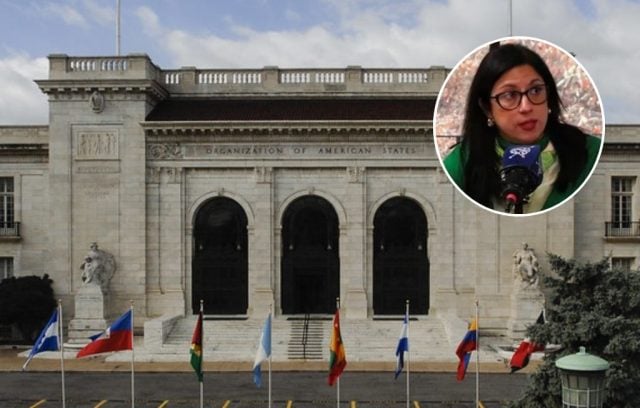
Although the government of José Antonio Kast sought to downplay the regressions experienced in Chile regarding human rights, truth, justice, and memory by claiming that the measures enacted are part of an «organizational reordering of the state«, the Inter-American Commission on Human Rights (CIDH) demanded documentation concerning budget cuts and the dismantling and weakening of institutions in these areas.
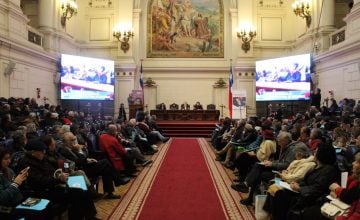
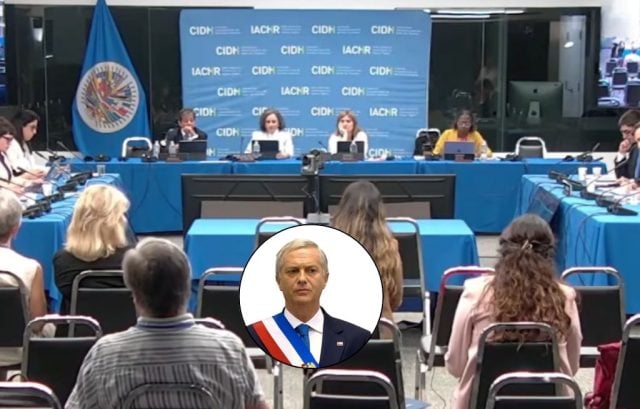
This request arose following a public hearing held Wednesday in Washington, where human rights organizations and public workers reported a systematic pattern of state weakening in the areas of truth, justice, and memory that has persisted since the President took office on March 11.
The session, conducted during the 196th session of the CIDH, was requested by these groups, who alerted the international body that with the installation of a new far-right government, an accelerated shift has occurred in addressing sensitive human rights, gender, and memory issues. They argued that the decisions taken jeopardize the continuity of public policies developed over decades to ensure truth, justice, equality, reparations, guarantees of non-repetition, and the prosecution of crimes against humanity.
They stated that the measures and budget cuts implemented by Kast impact specialized units, budgets, and public mechanisms aimed at protecting vulnerable individuals, preventing violence, preserving historical memory, and fulfilling the international obligations undertaken by the State of Chile.
Dismantling of Human Rights Institutions
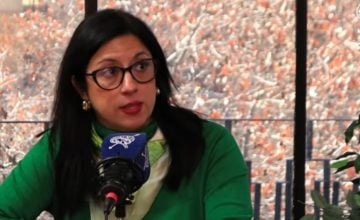
During the presentation before the inter-American body, the national director of the National Association of Public Employees (ANEF), Nuvia Guajardo, stated that this is not just a list of cuts, but rather “the systematic reduction of the capacities of the Chilean state to guarantee human rights”. The union leader also questioned the modification of the budget through decree, labeling this practice as unconstitutional, as it undermines the principle of separation of powers and the transparency in managing public resources allocated to sensitive areas.
The elimination of specialized units dedicated to victims of human rights violations was another key point in the testimony. Tamara Lagos from the Network of Observers in Justice and Memory detailed the closure or downsizing of key offices like the Victim Identification and Registration Unit and the Family and Origin Search Unit for Individuals Affected by Illegal, Forced, or Irregular Adoptions.
Lagos emphasized that these decisions are not isolated incidents, but instead form “a pattern of institutional dismantling” that directly impacts the state’s ability to provide truth, justice, reparations, and guarantees of non-repetition to victims and their families, as reported by Diario U. de Chile.
Weakening of Historical Memory
The status of memorial sites was also discussed during the session. Erika Hennings, president of the London 38 Memory Space corporation, revealed that of the 1,132 identified sites of detention, torture, and extermination in the country, only 72 have official recognition. This figure highlights a historical debt in terms of symbolic reparations, worsened by the precariousness of resources allocated for their maintenance.
Hennings warned that closing down a memorial site does not only mean losing a physical space but also losing a place essential for new generations to understand the systematic violations of human rights that occurred during the dictatorship of Augusto Pinochet.
The case of the former Colonia Dignidad has become a clear example of the reported regression. Paola Peebles from the Association for Memory and Human Rights Colonia Dignidad personally recounted the torture her father suffered at that facility and sharply criticized the government’s decision to not proceed with the expropriation of the 117 hectares. Peebles described this measure as “a grave setback” in seeking justice for one of the most notorious centers of extermination during the repression, especially considering that victims and their families still await reparations.
«Passive Pardons» for Dictatorship Criminals
The judicial arena has also faced criticism. Lawyer Magdalena Garcés denounced what she called “passive pardons” in the Human Rights Program, part of the Ministry of Justice. Since Kast took office, a change in criteria was enacted, instructing state lawyers to refrain from opposing requests for prison benefits from those convicted of crimes against humanity and serious human rights violations committed during the dictatorship of Augusto Pinochet.
According to the information presented, in 20 out of 23 hearings before Appeals Courts, the program neither opposed nor withdrew appeals in cases involving those convicted of crimes against humanity, following directives from the ministry. This practice, the lawyer argues, results in the disempowerment of victims and delays in judicial processes, perpetuating the impunity of the perpetrators.
Government Labels Human Rights Setback as “Organizational Reordering”
In response to the accusations, Chile’s permanent representative to the OAS, José Miguel Castro, described the allegations as “absolutely incompatible with factual reality” and defended the government’s ongoing commitment to international human rights obligations. From his perspective, the guarantees of truth, justice, memory, reparations, and non-repetition are “fully guaranteed and continuously being implemented,” rejecting the existence of any dismantling or institutional hollowing out, as reported by Diario U. de Chile.
The central argument from the Executive centered around the notion of “organizational reordering of the state.” Felipe Kipreos, from the Ministry of Foreign Affairs, explained that changes across various agencies are a response to a logic of resource optimization, not a removal of competencies. Specifically regarding the Indigenous Peoples Unit of the Ministry of National Assets, he assured that its functions were redistributed, maintaining compliance with ILO Convention 169, aiming to defuse criticisms regarding a supposed abandonment of the indigenous agenda.
Concerning the budget, the government insisted that cuts are part of an “ordinary, permanent, and mandatory” fiscal review process. Kipreos guaranteed that social programs like school feeding and early childhood education operate with “absolute normality and nationwide coverage,” reaching over 1.6 million students and benefiting 150,000 children. This defense sought to counter the narrative of widespread cuts, although it did not address specific criticisms regarding areas related to historical memory, whose budget is significantly lower than that of massive social programs.
Additionally, the Kast administration refuted claims of “passive pardons.” Jorge Hagedorn from the Undersecretariat of Human Rights labeled the existence of directives for the Human Rights Program to refrain from intervening in cases involving those convicted of crimes against humanity as “categorically false.” According to his exposition, the program’s participation is determined “on a case-by-case basis, in a technical manner,” strictly adhering to established laws and protocols. However, the figures presented by lawyer Garcés during the same hearing contrast with this version, leaving open the question of the scope of those technical decisions.
Regarding memorial sites and the former Colonia Dignidad, Hagedorn attempted to showcase proactive state management. He defended the Competitive Fund for Cultural and Memorial Site Projects ($168 million) and a program from the Ministry of Cultures amounting to $443 million, although he acknowledged that the adjustments made were a transversal fiscal measure. Regarding the halt of the expropriation of the German enclave, he justified the decision to not proceed due to “insurmountable representations of illegality” issued by Serviu del Maule, although he reaffirmed that the state aims to progress, leaving the actual viability of that promise uncertain.
UN Demands Stability and CIDH Seeks Accountability from Kast
The Regional Office for the Americas of the United Nations High Commissioner for Human Rights, through its representative Montserrat Solano, reminded that Chile has built a “relevant and robust institutional architecture” with respect to human rights since the return to democracy, and that any modification to key programs should be evaluated in light of international obligations and the need to avoid regressions.
This intervention introduced a fundamental principle: the stability of human rights institutions is just as important as their existence, and their weakening can cause irreparable harm to the trust of victims.
The UN representative emphasized the Human Rights Program and the National Search Plan. Her call to “carefully evaluate” changes reflects the concern that temporary administrative decisions might have permanent effects on access to truth and justice.
Solano also supported the complaints regarding memorial sites, underscoring that their preservation is part of the right to reparation and guarantees of non-repetition and requires “institutional stability, sufficient financing, and mechanisms to ensure their long-term sustainability,” a point that aligns with the criticisms of the organizations.
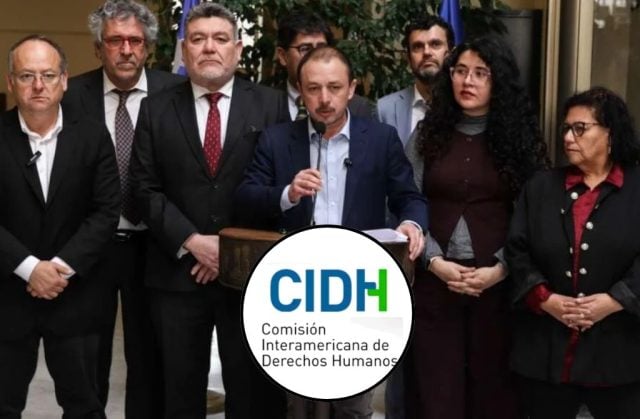
The outcome of the hearing was significant: the CIDH, after hearing all positions, formally requested the Kast government for specific and detailed information. The commission requested documentation regarding the National Search Plan, the evaluations used for institutional changes, and budgetary adjustments. This demand transforms the debate into a formal process of international oversight, obliging the state to account not only to national bodies but also to the inter-American human rights system.
The CIDH’s request highlights that warnings about a potential regression in human rights in Chile are taken very seriously by the international community, and that La Moneda must present evidence showing that the country is not experiencing the pattern of dismantlingto reported by organizations and workers.
Obtén tu Pasaporte y apoya a El Ciudadano
Elimina la publicidad, accede a contenido exclusivo y sé parte de la comunidad.
Cancela en cualquier momento · Sin permanencia