Original article: Cuando el fiscalizado mete mano al fiscalizador: reforma de Kast al INDH abre debate por autonomía, presupuesto y mandato
Kast’s Proposed Reform of the National Human Rights Institute Sparks Debate on Autonomy, Budget, and Mandate
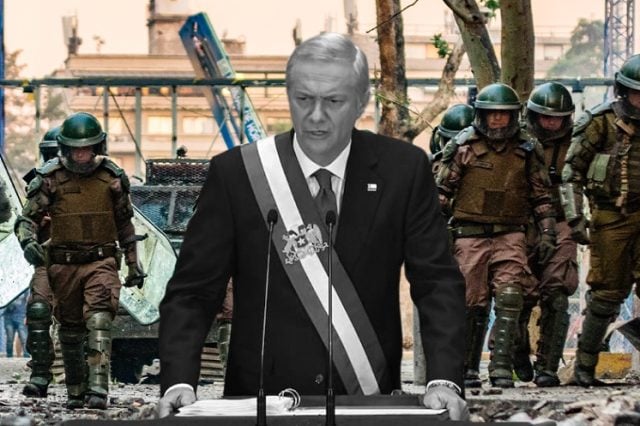
The draft legislation from José Antonio Kast‘s government to reform the National Human Rights Institute (INDH) has ignited a significant debate regarding the agency’s autonomy, its funding, and the scope of its mandate, amid fears of a potential covert dismantling by the entity being monitored.
Though the initiative does not yet have a date for presentation to Congress, the announcement from La Moneda has reignited a conversation that places the role of the INDH front and center in Chilean democracy. This controversy is not new: in recent years, the agency has faced political scrutiny, receiving criticism from various sectors regarding its performance and authority. However, current members of the institution believe that a constructive debate presents an opportunity to enhance its role.
INDH Autonomy and Budgetary Pressures
The primary discussion point revolves around the autonomy of the institute. Political scientist and INDH advisor, Cristián Pertuzé, emphasized that any reform must start by safeguarding this fundamental principle.
«One of the essential requirements for this body is its autonomy in management, given that it also serves as a watchdog over the State itself,» he stated to Diario U. de Chile.
He also pointed out the need to strengthen its functions and improve the organization, governance, and operation of the institute, which is closely tied to budgetary matters.
This view was supported by lawyer and fellow advisor, Constanza Valdés, who warned that constant negotiation and discussion over the institution’s funding could directly impact its independence from the bodies it is tasked with overseeing.
«This ongoing discussion diminishes the institute’s autonomy in relation to the decisions made and its pronouncements towards various state organs,» she stated to the aforementioned outlet.
Both advisors agreed on the necessity to review aspects related to governance and the internal structure of the organization. Pertuzé suggested that there is room to expand its regional presence, transparency, mechanisms for citizen participation, and processes for selecting authorities. Valdés mentioned recommendations that should be considered, such as changes to the Council’s composition, the creation of an administrative sub-directorate, and the enhancement of judicial powers.
«The main pillars of a serious strengthening reform should involve the mandate, budgetary autonomy, and its function,» he exemplified.
INDH Competencies: «Not a Public Prosecutor»
One of the points generating considerable confusion and criticism is the delineation of the INDH’s functions. Valdés firmly clarified that «the institute is not a Public Prosecutor’s Office,» as it is not responsible for directing any type of investigations, and «its work pertains to human rights violations, whether through actions or omissions of the State.»
She indicated that the institute cannot interfere in crimes between private individuals where there is no attributable omission by the State, but must act when the monopoly on force is exercised disproportionately.
The potential reform also presents an opportunity to address the challenge of legitimacy. Pertuzé mentioned that «the institute should function similarly to the Comptroller’s Office or the Council for Transparency, which are autonomous bodies fulfilling essential roles.»
Ideological Prejudices and Intolerance
Valdés concurred with this assessment, though she cautioned that the debate could be hindered by ideological prejudices. «Discussions suggesting it is a nest full of communists, that it is co-opted by a particular vision, seem to me to only obstruct the debate surrounding the institution,» she expressed.
Meanwhile, opposition lawmakers, such as Senator Fabiola Campillai (Ind), have warned that «this idea of reforming it is merely a symptom of intolerance and the lack of understanding displayed by the Chilean right in its relationship with human rights.»
Covert Dismantling
Senator Loreto Carvajal (PPD) called for a clear distinction between serious modernization and an attempt at dismantling by Kast’s administration.
«One thing is to promote serious modernization, and another very different thing is to use this discussion to sneak in a reform that ultimately dismantles the institution, as there is evident animosity from some government sectors towards it. Thus, we hope there will be a willingness to make substantive changes with the support of the Executive within the Human Rights Commission,» she declared as reported by Diario U. de Chile.
Obtén tu Pasaporte y apoya a El Ciudadano
Elimina la publicidad, accede a contenido exclusivo y sé parte de la comunidad.
Cancela en cualquier momento · Sin permanencia