Original article: Mónica Rojas Villavicencio: Una creadora con raíz
By Rodrigo Hidalgo and Elisa Montesinos
Photos: Lorenzo Mella / Manuel Rojas Cultural Center
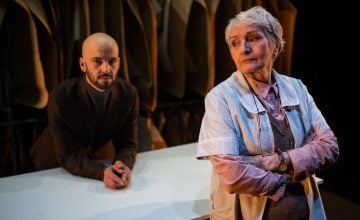
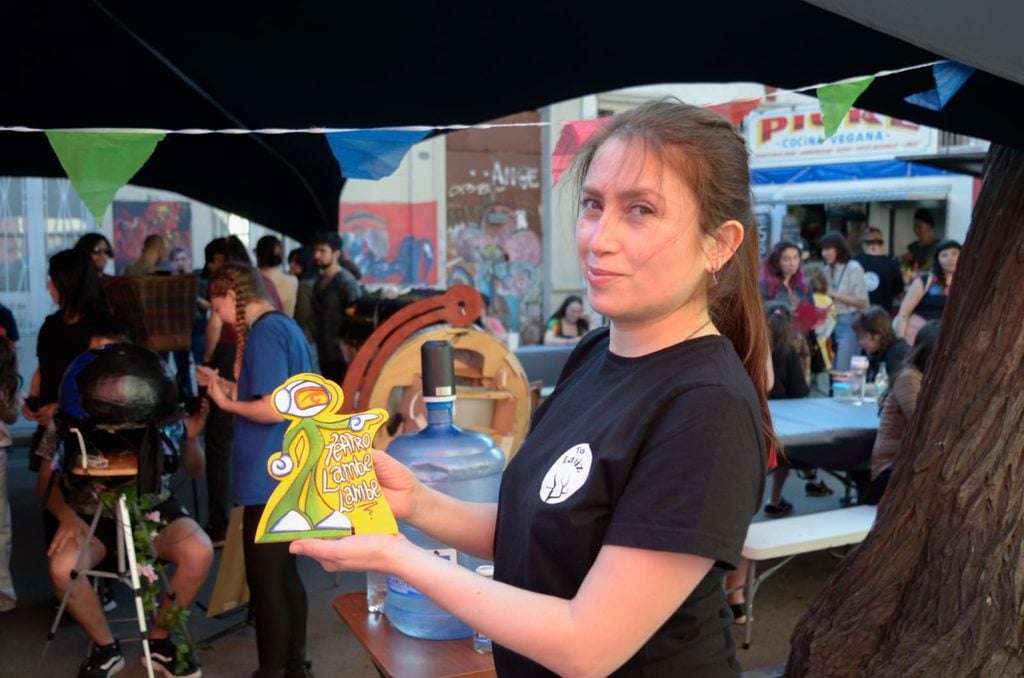
Mónica crafted microscopic worlds that captivated both young and old, from the residents of Yungay where she lived, to her peers in the theater community and lambe-lambistas (creators of miniature theater), and to those of us who had the privilege of knowing her.
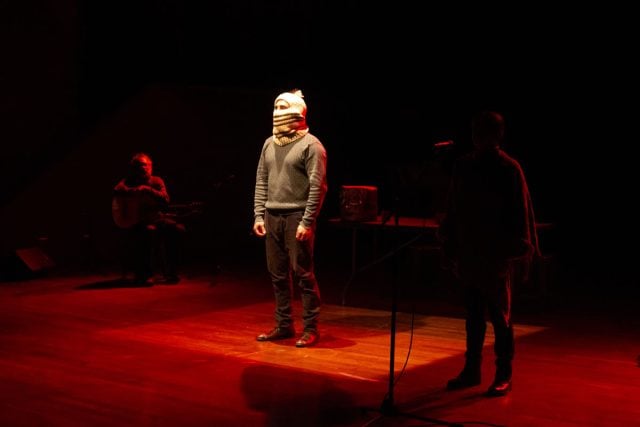
In her 43 years of life, she left an indelible mark on the communities she inhabited and engaged with. Mónica directed, acted, taught, trained actors and actresses, lived in a theater-house, and created at least three traditional works for the company she founded, Teatro La Raíz. One of these involved a close collaboration with a machi.
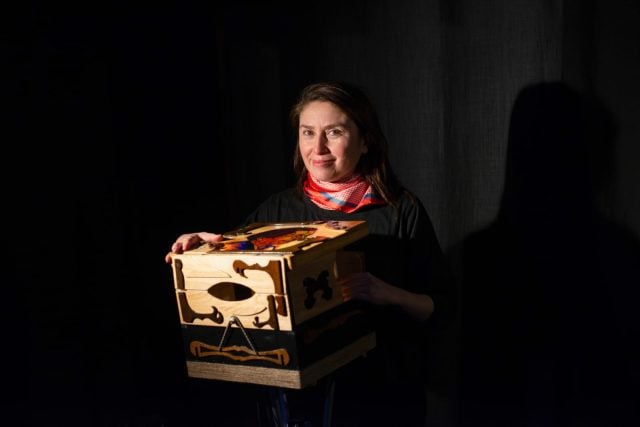
Her passing resonates deeply. More than the energy and dedication she poured into her work, her generous smile, and her captivating presence with her vibrant red hair and matching scarf as she walked through the streets of Yungay or at the door of the blue house where she lived for years—García Reyes 243, Casa La Raíz. From this operational center, she committed herself to creating theater from the ground up: community theater that welcomed everyone. It was here that her wake was held, in the grand hall, over two lengthy days and nights.
Neighbors gathered en masse, along with members from cultural organizations, artists, friends, family, and colleagues. Her spirit shone brightly from a simple casket adorned with flowers, messages of affection, and small tokens that recalled the worlds she had created.
Her departure resonates because it reminds us that the role of artists isn’t about appearing on TV or in entertainment magazines but rather about provoking unforgettable experiences, presenting something new, transforming lives, and above all, building community.
In the courtyard of the old house, formerly the Manuel Rojas Cultural Center, her mother mentioned that various lambe-lambe theater festivals will now carry Mónica’s name. This is her legacy.
Mónica was Moni to her close friends; they number in the hundreds, as the communities embracing popular creation are fertile and interconnect through a unique kind of pollination.
Among those bidding farewell with heartfelt messages on social media were groups of graphic artists, puppeteers, and theater professionals from various regions. Additionally, there were messages from a mother speaking for her children. How many children discovered theater through Mónica’s influence? For them, her face will remain forever linked to the magic of that experience.
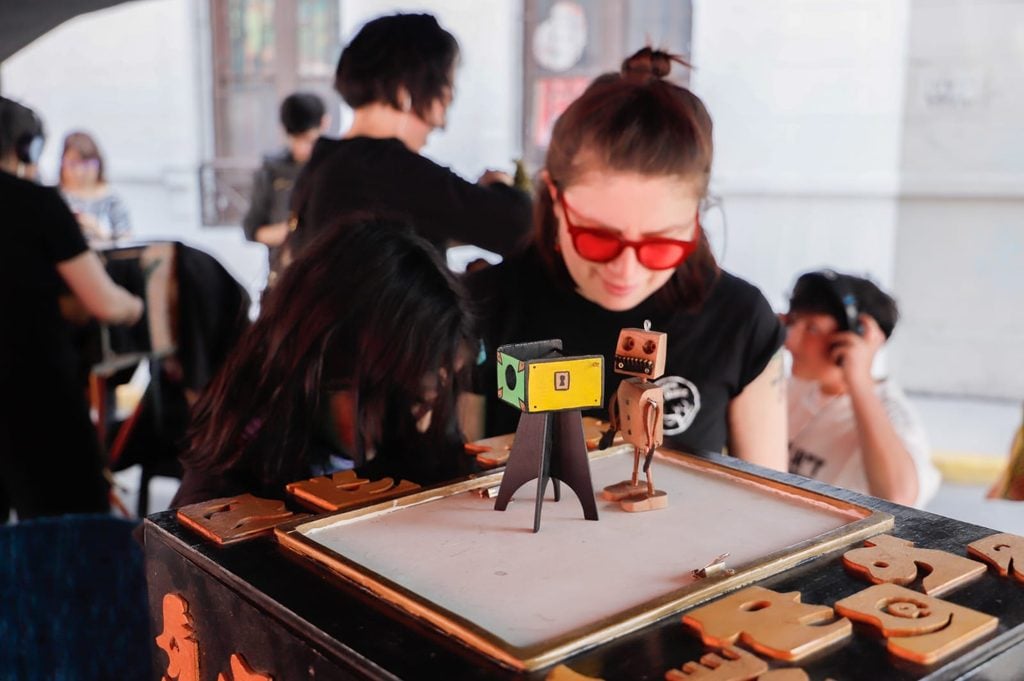
On Libertad Street, festivals and events unfold where entire families celebrate; the Teatro La Raíz company has always been there, bringing life to the event with their miniature performances, astonishing both seasoned theatergoers and those who have never stepped foot inside a theater.
The theater that Mónica and her group have nurtured, as well as their friendships and professional relationships that now extend throughout South America thanks to festivals, does not rely on a stage; it can happen at home, in the theater-house, or importantly, on the streets, welcoming all, regardless of their financial means.
The educational aspect is evident. It’s practically unnecessary to be able to speak; some of her mini performances are wordless, relying instead on visuals, sounds, colors, and captivating stories.
The secret is that what is micro can become macro, and what is local can be universal. Mónica’s story and that of the creators connected to the community, rooted in their neighborhoods and territories, can resonate far and wide. This is already evidenced by the tributes that are just beginning.
Whether you knew her or not, if you felt curious about experiencing lambe-lambe theater, a grand tribute will be held on Sunday, September 27, at Plaza Brasil to commemorate the 37th anniversary of this miniature performing art, created by puppeteers Denise di Santos and Ismine Lima in Salvador de Bahía, Brazil.
Inspired by the boxes of ancient street photographers, the spectator looks through a viewer and listens via headphones to the brief and intimate stories performed one person at a time.
In Chile, this art has been present for nearly 20 years, following its introduction by the Oani Foundation. This celebration in the heart of the neighborhood that Mónica Rojas called home will take place simultaneously in 22 cities around the world. What a beautiful way to remember and honor her!
Bonus Track: Farewells
Rodrigo:
The kultrún sounds once again. An open kultrún is the cherished image of the first play I witnessed from Teatro La Raíz at what was the Manuel Rojas Cultural Center.
Featuring a Mapuche girl named Fameunisa, the piece told how a revealing dream communicated her destiny: she was to become a machi, as she understood the powers of plants and the language of birds, even helping those ensnared by the dark snares of the wecufe.
Where does Fameunisa end and Mónica begin? Fly high, immense little woman, knowledgeable of the blue mysteries of the womb of time. You arrived at García Reyes to keep opening those windows and nourishing the vine, orange trees, and olive; to ensure that joyful laughter of children continued resonating within its walls and staircase, adding your memories to ours.
We were united by a home made of a thousand arms, by the shared understanding of art as the only political stance, and even by the second burial of a dog. Such a mystery to reflect the echo between your experiences and ours living within those same walls, nourishing ourselves in that same kitchen, bathing in that same bathroom. Your death is so unjust that it even falls on a date so painful and national.
I don’t know what more to say; once again, words fail me in the face of your mercilessly beautiful visage behind the glass of a coffin. Embraced by Gustavo, your mother, and your countless loved ones, we say: rest in peace, dear root puppeteer of the universe.
Elisa:
A few days ago was the farewell. I saw a lambe-lambe play from the company Voy y vuelvo titled Naufragio. Two flying beings, whether fish or birds, were perched on the bow of a boat and the agitated sea; they approached and retreated in flight.
Jorge, the director, is waiting for comments. I tell him I experienced varying emotions and connected with Mónica, who I suspect he knew, as did anyone involved in miniature theater in Chile. Tears fill his eyes. I continue: I felt that those beings were spirits and that it was she moving through the air and traveling.
We embrace. He says that despite the sorrow, remembering her also brings joy, for she “was pure laughter.”
21/09/2026
Obtén tu Pasaporte y apoya a El Ciudadano
Elimina la publicidad, accede a contenido exclusivo y sé parte de la comunidad.
Cancela en cualquier momento · Sin permanencia